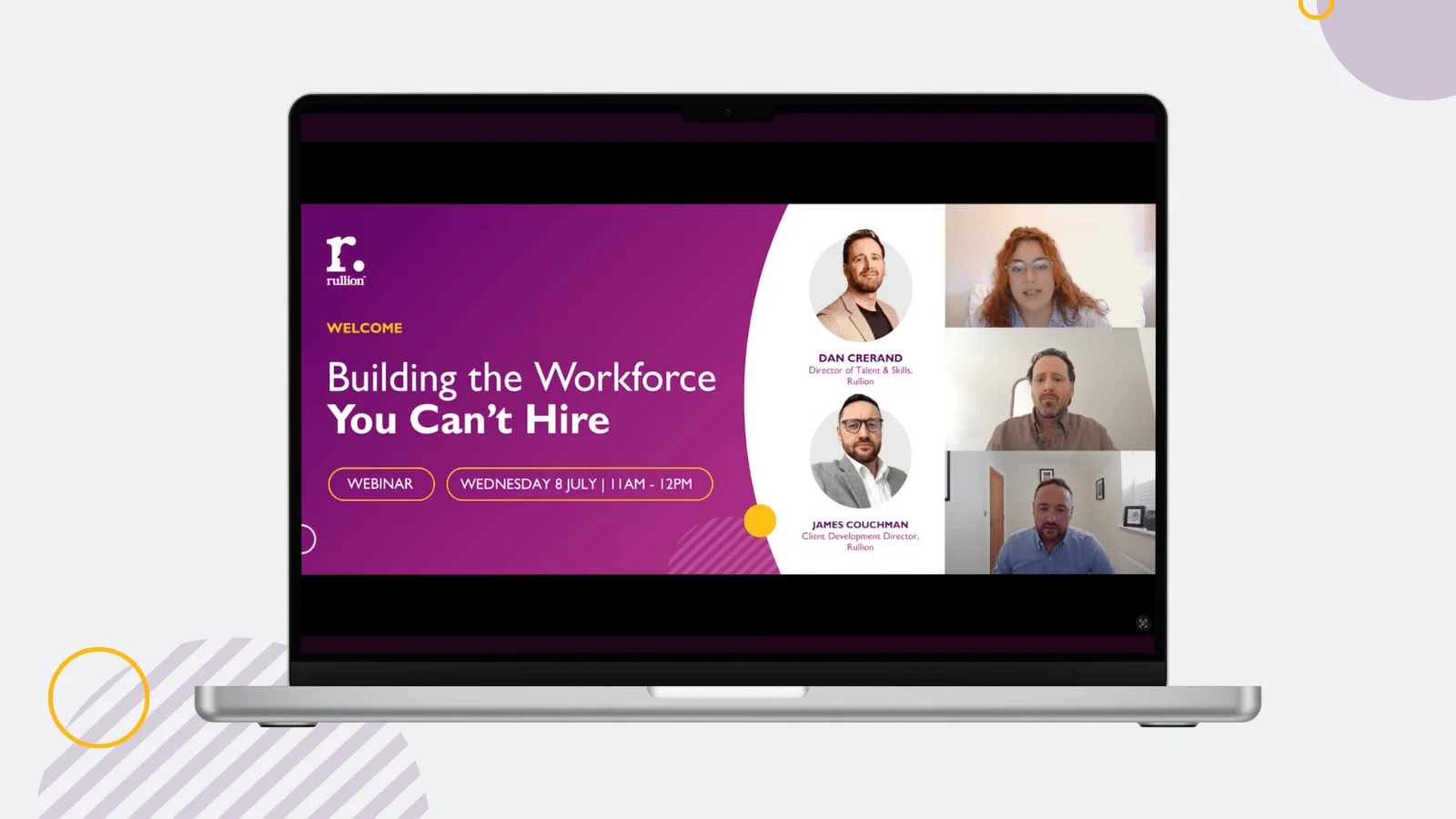
Building the Workforce You Can't Hire Webinar
08 Jul, 2026


AMP8 brings the most ambitious expectations ever placed on the UK water industry:
Reduce pollution and storm overflows
Deliver measurable progress toward Net Zero
Improve affordability and customer service
Embrace digital tools and smart infrastructure
Integrate nature-based and resilient solutions
Each of these priorities demands a workforce that is capable, motivated, and equipped to deliver - across both permanent and contingent roles. Without the right talent strategy, investment targets and project outcomes risk falling short.
The challenges of AMP8 go far beyond technical delivery. Utilities face rising customer expectations, increased regulatory scrutiny, and a competitive talent market that extends well beyond the sector. Digital transformation is accelerating across the utilities sector. This acceleration and pressure to transform is having an unavoidable impact on water companies and their ability to effectively resource projects as the skills needed to support are in short supply.
The sector’s long-term resilience will depend on how well organisations can adapt their workforce strategies now - before skills shortages become critical roadblocks.
For all its ambition, the water sector enters AMP8 with a growing talent gap. Existing workforce strategies are under pressure and in many cases, outdated.
Almost a third of the industry’s workforce is nearing retirement. Without effective knowledge transfer and succession planning, utilities face the loss of decades of technical expertise and operational experience - skills that can’t be replaced overnight. Rullion helps water companies tackle this challenge head-on by:
Embedding succession planning into workforce strategies so knowledge is retained, not lost.
Combining behaviour-first hiring with mentoring programmes to bring in early-career talent who can learn directly from experienced professionals before they retire.
Using our Managed Service Programme (MSP) to track skills data across the contingent workforce, identifying potential gaps years in advance and planning resourcing accordingly.
This approach not only preserves institutional knowledge but ensures organisations are continuously building capability for the future, rather than reacting after critical skills have already walked out the door.
The digitalisation of asset management, data analytics, and cyber-secure operations is outpacing current talent pipelines. The result? Skills gaps in key areas like project delivery, engineering, and smart infrastructure implementation - all of which are essential for AMP8 success. Rullion bridges these gaps by:
Partnering with clients to map emerging skills needs linked to AMP8’s digital and transformation goals.
Using our Train to Deploy model to upskill candidates into roles such as data engineers, SCADA specialists, and digital project managers.
Taking a sector-agnostic view of talent by identifying people from other industries (e.g., energy, manufacturing, defence) with transferable digital skills and preparing them for water-sector delivery.
Leveraging our MSP for utilities to ensure project-critical roles are filled quickly without compromising on quality or compliance.
By combining proactive workforce planning with targeted skills creation, we help utilities keep pace with digital transformation, rather than playing catch-up.
The water industry is no longer competing solely with other utilities. Water companies are now recruiting in the same pool as energy, renewables, and tech; sectors which often offer more competitive packages. To succeed water companies must rethink what makes their workforce strategy competitive, sustainable, and future-ready. And ultimately what differentiates them as an employer of choice.
Right now, most of the conversation focuses on what the sector lacks - an ongoing shortage of engineering, project delivery, and digital skills. But what if we reframed the challenge? Across the UK, there is an abundance of people with the right behaviours, values, and potential to thrive in these roles. The opportunity lies in unlocking that potential through targeted training and development.
That’s why forward-thinking utilities are starting to invest in models like Train to Deploy, which create the skills needed for AMP8 rather than competing endlessly for a limited external talent pool.
Meeting the challenges of AMP8 requires more than reactive hiring. It calls for strategic, agile workforce solutions that can scale with demand, address niche skills gaps, and embed diversity and inclusion from the outset. At Rullion, we help water and utilities organisations transition from short-term resourcing to sustainable workforce transformation.
Our Managed Service Programme (msp)model provides:
Greater visibility and control over contingent workforce spend
Reduced time-to-hire across critical roles
Optimised supplier performance