Building the Workforce You Can't Hire Webinar
08 Jul, 2026
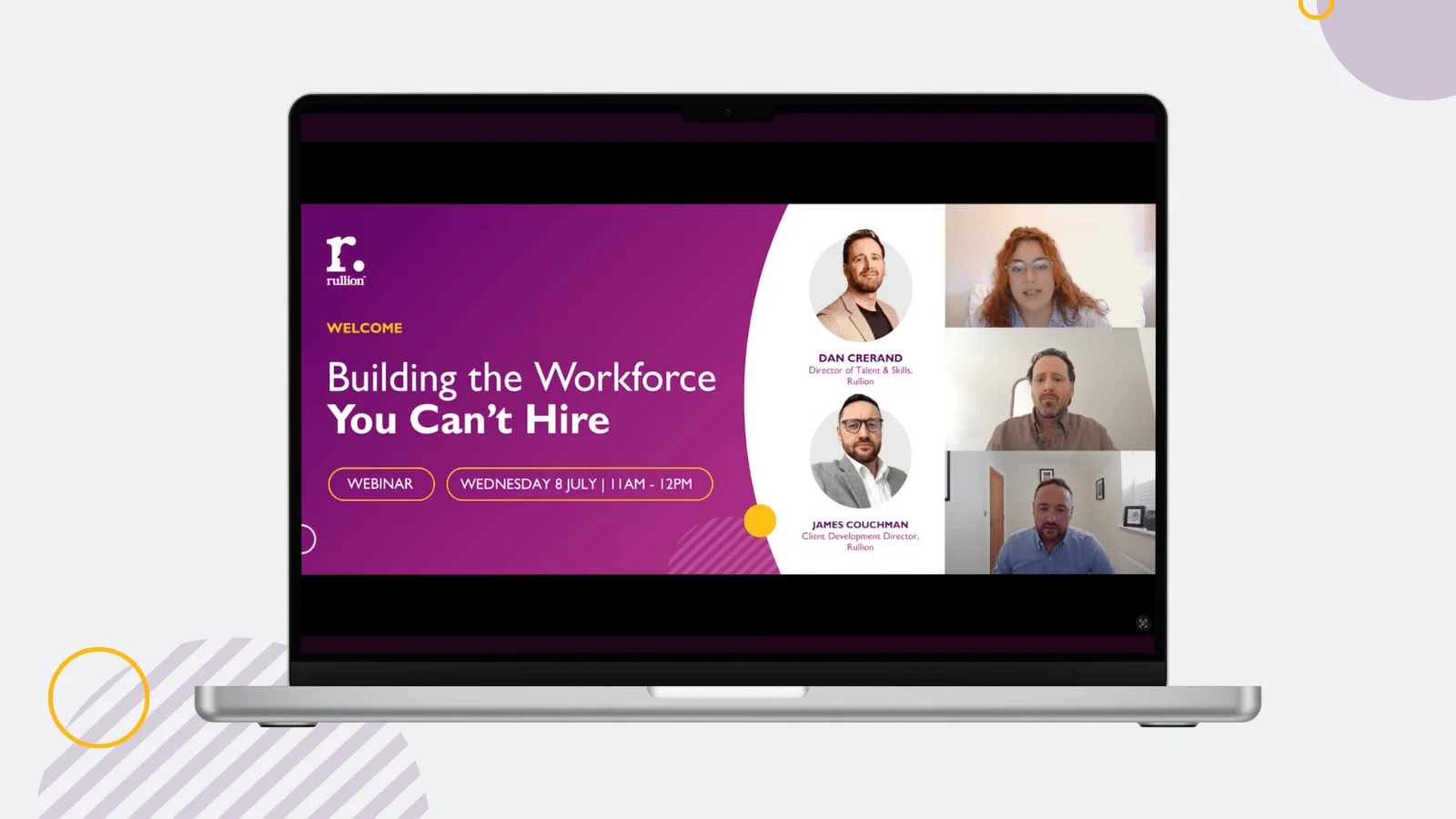



Train to Deploy is a scalable, future-focused workforce solution. It replaces legacy recruitment with a sustainable approach that combines behaviour-first hiring with bespoke, role-specific training, enabling you to deploy work-ready people aligned with your business from day one. Here’s how to position a Train to Deploy workforce strategy as the strategic answer your business needs now.
Before you pitch a solution, your first job is to make the cost of doing nothing impossible to ignore. Here are 5 signs your workforce needs a Train to Deploy strategy to get you started. Use hard data to show where your current hiring model is falling short and what that’s costing you. Start by asking questions your leaders will care about:
Are the same roles being readvertised month after month?
Are niche capabilities slowing or stalling project delivery?
Is critical knowledge walking out the door as retirements rise?
Are high vacancy rates impacting timelines and team cohesion?
Do long onboarding periods stall delivery and productivity?
Can your team scale quickly enough for upcoming project peaks?
If time-to-hire is 45+ days and onboarding takes another 30+ days, how much delivery time are you losing?
Are legacy hiring filters limiting access to diverse, high-potential candidates?
Are you falling short on DEI or ESG bid requirements in public sector or regulated tenders?
Do you lack scalable, measurable programmes to attract, develop, and retain under-represented talent?
Your goal is to then articulate the long-term risks of continuing with business as usual. To get stakeholder buy-in, you need to frame the commercial impact of inaction. Make sure you define both direct costs and knock-on consequences of not addressing your current approach.
Add up your full cost per hire: agency fees, internal resource time, readvertising, interview panels, onboarding, and early attrition.
The average cost per hire in the UK is £3,000–£5,000. For 30 hires per year, that’s £90K - £150K before you account for the cost of replacing those who leave early.
Then factor in:
First-year attrition
Contractor spend to plug gaps
Time-to-productivity lag with ramp-up times resulting in value not being delivered
Every week a role remains unfilled, you lose delivery hours. Every month a new hire is onboarding, and your project velocity drops.
Delayed milestones = missed SLAs or penalty clauses
Lost momentum = increased risk of burnout in stretched teams
Lower team efficiency = knock-on delays in other workstreams
Even a 10-day hiring delay across 5 projects can equate to hundreds of lost delivery hours or tens of thousands in opportunity cost.
For public sector frameworks and many regulated sectors, bids require proof of community investment and inclusive hiring. If you’re failing to demonstrate social value or provide measurable DEI outcomes, you could be missing out on commercial opportunities.
Once you’ve demonstrated the cost of inaction, you’ll need to demonstrate how a Train to Deploy workforce strategy can address the real problem. Your workforce model no longer fits today’s reality.
Instead of relying on CVs and past job titles, Train to Deploy starts with what really matters: mindset, adaptability, learning agility, and culture fit.
How it solves the problem:
Increases retention by hiring based on long-term fit; when people align with your values and environment from day one, they’re more likely to stay long term.