The Hidden System Keeping Britain’s Rail Workforce on Track

BLOGBy Rullion on 20 October 2025

In this edition of Confessions of a Screening Expert, Diane Ravenscroft, Candidate Services Team Leader at Rullion, shares with Sibel Akel, Marketing Director at Rullion, how background screening works in the rail sector, and why Sentinel, Network Rail’s Authority to Work system, is central to safety and compliance. From simple steps candidates can follow to clear faster, to the human touches that remove friction in high-risk environments, Diane reveals how Rullion keeps people safe, compliant, and site-ready.

Screening on the Right Track: Rail, Sentinel and the Human Difference 

When you ask Diane Ravenscroft how long she’s been at Rullion, she smiles: “Twenty-six years.” In that time, rail has transformed - from laminated cards and manual calls to smartcards, live databases and mobile apps. One thing hasn’t changed: safety comes first. 

“Our job is to make sure everything’s safe and everything’s in place before someone goes trackside,” says Diane. 


First things first: what is Sentinel? 

If you work on or near the UK rail infrastructure, you’ll know Sentinel. It’s the rail industry’s Authority to Work system, a smartcard linked to a secure database and app that lets duty holders verify a worker’s competence and fitness to work in real time. Put simply: Sentinel is the passport to work trackside, owned and operated by Network Rail for the industry. 

Supported by the Sentinel Scheme Rules, every supplier working within the rail infrastructure must follow and adhere to these standards - effectively a contract outlining the responsibilities of sponsors, custodians, and cardholders. As Rullion is a Primary Sponsor to its rail workers, its role is to safeguard each candidate and ensure they are fully safe and compliant before stepping onto the network. 

As Sibel Akel, Marketing Director, asks Diane in the interview: “So what is Sentinel, in simple terms?” 

Diane responds, “It’s how the industry checks competence and fitness in near real time, the last mile of assurance before someone steps onto the track.” 

Part of that responsibility includes ordering and recording PPE (personal protective equipment), ensuring it’s correctly issued and evidenced, and making sure every worker receives their unique Sentinel cardsimilar to a driving licence, complete with a chip linking all their credentials, medical fitness, and competencies. It’s the record that allows each worker to move safely around site.


Why it matters


Rail is one of Britain’s safest transport systems. It is a result of relentless focus on standards, competence and verification. In 2023/24, RSSB (Rail Safety and Standards Board) recorded zero passenger and workforce fatalities in train accidents, a headline that reflects systemic improvements in assurance and risk controls.  

At the same time, the risk landscape on Britain’s railways remains very real. The ORR’s 2025 report notes that while overall train accident risk stayed “broadly consistent” with recent years, serious events continue - including 29 high-potential incidents, most of which occurred at level crossing. 
 
For those responsible for screening and workforce readiness, it’s a clear reminder: compliance, competence, and site verification via systems like Sentinel remain critical. Even with a strong safety record, there is little margin for error.


How Sentinel works (and where screening fits) 

Sentinel sets out the rules, roles, and responsibilities for sponsors, card holders, and custodians. It underpins competence (such as PTS) and fitness-to-work checks, enabling on-site verification by scanning a card or app to confirm a worker’s authority to be there. 

This is where Rullion comes in. Through pre-employment screening Rullion ensures workers are fully cleared and ready to be added into client workflows and shift plans. That includes Right to Work checks, identity verification, criminal record checks (where required), employment history, and role-specific evidence. 

In rail, speed without accuracy is risky and accuracy without communication is slow. 

“The difference is the human touch,” Diane explains. “Candidates know who’s looking after them. We talk them through what to prepare, what documents we need - and we keep them updated.” 


A 6-step simple, rail-ready process that removes friction 

1) Welcome call (the golden five minutes) 
Before any links go out, a Rullion advisor calls the candidate to explain the journey and exactly what to prepare; passport, proof of address, full employment history with contacts, and training evidence. For rail, we also set expectations around Sentinel competencies (e.g. PTS) and what will be verified on site. This first call prevents the stop-start delays that can derail onboarding. 

2) Smart digital journey 
Candidates submit their details through a secure portal while Rullion completes the Right to Work check, DBS (if required), employment references, and any role-specific verifications. Where some providers rely entirely on automation, Rullion’s advisors follow up personally - calling when it’s faster, emailing when it’s enough - to keep each case moving. 

3) Competencies and specialist checks 
Depending on their role, candidates may also need competencies such as COSS (Controller of Site Safety) or OLEC (Overhead Line Electrification Construction). Each competency has specific training and evidence requirements that must be verified before booking, and every record links back to the candidate’s Sentinel profile. 

4) Fatigue management and wellbeing 
Rullion also manages fatigue as part of its duty of care. The team tracks every worker’s shift patterns, start and finish times, travel, and breaks to ensure no one exceeds the rail industry’s safety limits. Each worker must have a minimum 12-hour rest between shifts and a maximum 14-hour ‘door-to-door’ working day, including travel. This proactive fatigue management protects both workers and projects and is managed closely in collaboration with Rullion’s Health and Safety team. 
 
5) Sentinel-aware handover 
Once cleared, Rullion delivers a complete file, not an amber traffic light the client must finish. For rail, that means sponsors and hiring teams can move confidently into Sentinel card and competence steps knowing screening is complete and compliant. 

6) Weekly client reviews 
Short cadence calls surface issues early (non-responsive candidates, missing documents, training bookings) so the plan stays on track.


Sentinel: How to get the best from it 

What works brilliantly 

  • Real-time authority checks: Scan the card/app and confirm competence + fitness instantly - essential for safety-critical shifts. 

  • Industry-wide standard: Because it’s Network Rail’s system, suppliers and projects share a common language for competence and assurance. 

Common challenges (and fixes) 

  • Data completeness: Sentinel confirms authority to work; it doesn’t collect your pre-employment data for you. If screening is incomplete or messy, everything slows. Fix: lead with a human welcome call and a clear document checklist. 

  • Edge-case confusion: New to rail? Acronyms like PTS, COSS, OLEC, competence codes and fatigue rules can overwhelm candidates. Fix: explain rail-specific requirements in plain English at the start; use email templates + one named advisor. 

  • Sponsor responsibilities: The Scheme Rules place duties on Sponsors (e.g., registration, managing breaches, maintaining primary sponsorship). Fix: give hiring managers a one-page “Sponsor 101” crib sheet with key rules and escalation paths.


Why the human touch still wins in rail 

Safety-critical environments reward clarity and confidence. A mistyped email or missing proof of address can stall a start date; a five-minute call can remove weeks of delay. And when the stakes are high, candidates value reassurance - knowing what to expect at their medical, what a PTS induction involves, and how on-site Sentinel scans actually work. 

We explore more on the power of human-led screening in Pre-employment screening mistakes to avoid. 

Automation has improved efficiency, but human oversight still ensures the data means something. Rullion’s digital systems has its benefits, for example, it tracks when competencies are due to expire, automatically flagging renewals before they lapse, a small but vital evolution that keeps compliance strong and safety seamless.


Action points for rail employers and recruiters 

  • Make Sentinel everyone’s business: Share a one-pager: what it is, how scanning works, who the Sponsor is, and how to report concerns/breaches. 

  • Front-load candidate guidance: Use a welcome call and checklist to prevent rework (Right to Work check items, DBS documentation, full employment history with contacts). 

  • Insist on complete files: Don’t accept “amber” returns you have to finish internally. In rail, partial screening equals operational delay. 

  • Measure what matters: Track average time to clear and % cleared first time with no rework. Celebrate teams that hit both speed and accuracy. 

For organisations selecting a rail recruitment or background screening partner for the first time, experience and evidence should come first. It’s essential to choose a provider that is regularly audited, holds the right accreditations, and can clearly demonstrate how it manages workforce safety and compliance. Understanding the Sentinel Scheme Rules takes time and expertise, so working with an experienced partner ensures the process is done right from the start. 

Or, as Sibel summarises: “Whoever you go with, make sure they understand the Sentinel way of working - because that’s what keeps people safe.” 


The power of experience and teamwork 

Managing the Sentinel process isn’t something that can be picked up overnight. It takes time, training, and experience to understand what’s set out in the Sentinel Scheme Rules and why each part matters. The work is subject to rigorous annual audits, supported by Rullion’s Health and Safety team, to ensure every step of the process remains compliant, consistent, and watertight. 

Rullion’s track record speaks for itself. “We’ve passed every audit I’ve been involved in for the last five or six years - and that’s because everyone plays their part,” says Diane. “It’s a team effort across Candidate Services, Front of House, and Health and Safety.” 

At Rullion, teamwork is at the heart of everything we do. Within Candidate Services, experience runs deep, (team members like Kelly Smith and Susan Good, both Senior Candidate Services Advisors, share more than 45 years at Rullion between them). That collective expertise means challenges are solved quickly, standards remain consistent, and candidates always have someone they can trust. Even as a remote team, collaboration has never been stronger. Daily communication, shared systems, and a culture built on mutual support keep everyone connected and focused on one shared goal: helping clients and candidates get work done. 

Share
Need rail screening that’s fast, safe and Sentinel-ready?

Rullion’s background screening services blend human advisors with smart tech to deliver pre-employment screening that stands up in safety-critical rail environments. From Right to Work checks to role-specific verifications, we keep your people compliant and your projects moving.

More like this

BLOG
Exploring purpose-led water industry careers

Exploring purpose-led water industry careers

Careers in the water industry are not always the first place candidates look when they start thinking about purpose-led work. But they should be. There is a gap that sits quietly in the middle of many careers. The work pays the bills and the role is fine on paper. But somewhere underneath the routine, there is a question that does not quite go away: does any of this work actually matter? For a growing number of younger professionals, salary alone no longer drives their career decisions. For Gen Zs and millennials, meaningful work, work-life balance, and a sense of purpose now sit alongside pay as major factors in how they judge employers and career moves. And yet the sectors that get associated with purpose-led work remain a fairly short list: healthcare, education, the third sector, and renewables. The water industry rarely makes that list. And it should. If you are exploring water industry careers for the first time or reconsidering a sector you had already written off, it’s worth taking a second look. Jump to: What does having a purpose-led career actually mean? The utilities sector has a perception problem The climate case for choosing a water industry career Community impact you can actually see The innovation happening inside the water industry What roles exist in the water industry? How to start exploring a career in water What does having a purpose-led career actually mean? “A purpose-led career” has become a phrase that can stretch to cover almost anything, which means it is sometimes vague enough to risk meaning very little. But at its simplest, a purposeful career means your daily output connects to something beyond the business itself. Beyond a company's commercial objectives, there is a positive impact on wider communities and the natural world. Purpose lives inside any sector where the work is essential and the people doing it understand the difference their contribution makes. The water industry sits squarely in that. The question is why so few candidates are looking there. The water sector has a perception problem It would be dishonest to write about water industry careers without addressing the obvious. The sector has had a difficult few years in the public eye, from untreated sewage discharges and high-profile financial difficulties to criticism of executive pay, ageing infrastructure, and concerns about whether the system can keep pace with demand. These issues have formed how many people outside the sector see it. Here’s what doesn’t often make the headlines: The utilities sector is now being held to higher public standards than at any point in recent memory. The Water Industry (Special Measures) Act 2025 gave Ofwat and the Environment Agency stronger enforcement powers, including the ability to block executive bonuses at underperforming companies. Within the rule’s first year of the operation, Ofwat blocked more than £4 million of executive bonuses. This supports the continued focus on transparency and accountability across the water industry. Then there is AMP8. The 2025 to 2030 asset management period represents the largest capital investment programme in the history of the English and Welsh water sector, with approximately £104 billion approved by Ofwat. The people being hired in the near future will help deliver and commission water infrastructure that communities will rely on for decades. Curious about what that means for hiring across the sector? Our Talent on Tap whitepaper dives into the workforce pressures the water industry is up against as AMP8 delivery continues to ramp up. The climate case for choosing a water industry career For candidates drawn to environmental work, the water industry offers something many sectors struggle to provide: a direct connection between daily work and climate outcomes. Water scarcity, flooding resilience, catchment health, and river restoration are active priorities inside water utilities jobs. Catchment scientists are helping restore rivers degraded over decades Environmental compliance engineers are reducing pollution incidents at source Sustainability leads are designing net zero pathways for energy-intensive treatment processes Hydrologists and engineers are delivering storm overflow remediation schemes Ecologists, planners, and landscape specialists focused on nature-based solutions such as wetlands, sustainable drainage, and restored floodplains What makes these careers meaningful is not just the environmental language around them. It is the fact that the outcomes are tangible: storm overflow schemes that reduce untreated discharges into rivers and coastal waters; wetlands and restored floodplains that help manage flooding and improve biodiversity; lower-carbon treatment processes; and infrastructure better equipped for a changing climate. Supporting this, most major utility companies have made net zero commitments, with programmes covering renewable energy generation at treatment works, fleet electrification, sustainable drainage design, and embodied carbon reduction across capital projects. Continuing to show real impact for wider communities. Community impact you can actually see The scale of essential services is difficult to match. Water utilities serve entire populations. It creates a particular kind of professional responsibility that is difficult to replicate elsewhere. These programmes exist across the full breadth of the utilities sector, in urban and rural settings throughout England, Wales, and Scotland. A treatment operations team monitoring water quality through the night so that millions of people can turn on a tap in the morning without thinking about it A network planning team working to ensure pressure holds across a distribution system during a summer heatwave A community engagement lead explaining a storm overflow improvement programme to residents who have watched their local river deteriorate for years While investment and regulatory frameworks differ across the UK, utilities organisations nationwide are facing similar pressures. Take two examples: Scottish Water is publicly owned, while Dŵr Cymru (Welsh water) operates as a not-for-profit. Both reinvest the surplus into infrastructure and communities rather than distributing it to shareholders. That means value can be directed back into the network and communities they serve. The innovation happening inside the water industry One of the more persistent misconceptions about water industry careers is that the work is traditional in a way that leaves little room for innovation and the kind of technical challenge that attracts candidates from the more popular mainstream industries. Water utilities are solving genuinely hard problems with emerging tools: AI-driven leakage detection is reducing the volume of treated water lost through distribution networks Digital twins of entire water systems allow engineers to model and test scenarios before committing to capital expenditure Smart metering is generating large, complex datasets that need people who know how to work with them Ofwat's innovation fund has been backing these initiatives through cross-sector collaboration and new approaches to network management and environmental monitoring, creating space for organisations to bring in methodologies from outside the sector. We’ve seen this firsthand through our work with the Northumbrian Water Group. Rullion’s involvement in the NWG Innovation Festival last year has given us a direct window into how utilities are bringing together engineers, technologists, and sustainability specialists to tackle challenges that don’t have an easy answer and are quietly doing some of the most interesting work in the sector. The water industry is preparing for a generational shift The water industry will see over 20% of its experienced professionals retire in the next decade. As innovation reforms how utilities are managed and the pressure on water infrastructure grows, the people who step into those roles will be defining what the sector looks like for the next generation. AMP8-focused capital programmes are already generating demand for data engineers and digital project managers alongside traditional civil and mechanical engineering roles. That demand is only set to grow. For professionals considering a move from construction or energy, the translation is closer than it might appear. Embodied carbon reduction in infrastructure design and programme delivery under regulatory scrutiny are disciplines where experience from adjacent sectors is actively valued. What roles exist in the water industry? Water utilities careers span a wider range of disciplines than most people outside the sector realise, and it is worth mapping them out clearly. Operational and scientific Water quality scientists Treatment process operators Catchment and environmental managers Compliance specialists Laboratory analysts Engineering and capital delivery Civil, mechanical Electrical and process engineers Capital delivery managers Quantity surveyors Project engineers With AMP8 programmes running through to 2030, programme delivery roles are in sustained demand. Digital and data Data engineers Network modelling specialists Smart metering programme managers Digital transformation leads Environmental and sustainability Net zero programme managers Ecological advisors Sustainable drainage specialists Carbon analysts Commercial, finance, and communications Procurement, finance, commercial, and communications functions exist at scale across all major utilities, and experience built in other sectors transfers readily into them. Early career pathways Graduate schemes and degree apprenticeships are well-established entry points for early-career candidates, offering structured development alongside real delivery responsibility from the start. How to start exploring a career in water For candidates looking for work that combines long-term stability, technical challenge, and visible community impact, water industry careers may be worth considering. And the starting points are accessible: CIWEM (the Chartered Institution of Water and Environmental Management) is the professional body for the sector, and a good source of industry insight, events, and career resources Water UK represents the sector's major utilities and publishes workforce and investment data that gives a clear picture of where demand is concentrated WaterAid and The Rivers Trust are worth exploring for candidates drawn to the international development or river catchment dimensions of water work If you’re keen to explore further, the opportunities are already there. Water companies and their supply chains are hiring across engineering, environmental, digital, commercial, project delivery and operational roles. Vacancies are appearing on utilities careers pages, through specialist recruiters, and on major job boards. As a specialist recruitment partner in the utilities sector, we help candidates understand where their skills fit and which opportunities align with the kind of impact they want to make.

By Rullion on 28 May 2026

NEWS
Rullion joins Rail Forum to support rail recruitment

Rullion joins Rail Forum to support rail recruitment

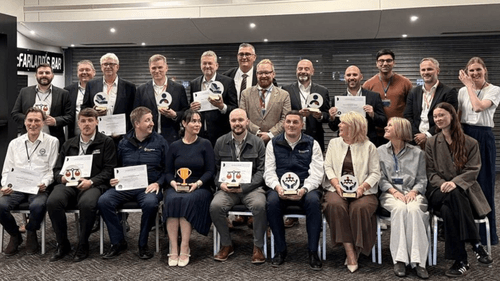
Rullion has joined Rail Forum, strengthening its connection with the UK rail industry at a time when workforce demand, skills availability and project delivery pressures continue to shape the sector. The membership supports closer collaboration with industry partners and reflects a shared commitment to developing a skilled and sustainable rail workforce. James Saoulli, CEO at Rullion, said: “Rail has a major role to play in the UK’s long-term economic growth, and there is clear momentum behind the sector. Significant investment, increasingly complex programmes and growing workforce demand mean organisations will need strong delivery partners and access to specialist skills more than ever. Joining Rail Forum reflects our commitment to staying close to the challenges and opportunities shaping the industry and continuing to support rail organisations with the workforce expertise needed to keep critical programmes moving.” Rail Forum’s role in the UK rail sector Rail Forum is a national rail industry body representing organisations across the full supply chain. It brings together operators, suppliers and partners to collaborate on the issues shaping the sector, from skills and workforce development through to delivery and investment. Supporting industry collaboration and workforce development Joining Rail Forum allows Rullion to be part of the wider industry conversations around skills, workforce planning and project delivery. These challenges are becoming more interconnected, particularly as rail programmes rely on a mix of permanent teams, contingent labour and specialist suppliers operating across different stages of delivery. Strong collaboration between rail recruitment agencies, suppliers, and operators will be essential to support delivery and long-term growth. James Couchman, Rail Director at Rullion, said: “We are pleased to be joining the Rail Forum and welcome the enhanced visibility it provides. We look forward to developing valuable partnerships and exploring collaborative opportunities within the sector.” Rullion’s experience in rail recruitment Rullion has extensive experience delivering workforce solutions across the rail sector, including market-leading MSP and RPO solutions, with strength in rolling stock recruitment alongside rail infrastructure and operational support. Over the past two years, Rullion has delivered more than 1,100 placements, supporting clients to access the specialist skills needed to keep projects moving. Rullion’s experience in rolling stock recruitment continues to support some of the UK’s most complex fleet and maintenance programmes. Expanding access to rail talent across key markets Alongside its core rail recruitment solutions, Rullion continues to invest in initiatives that support long-term workforce development. This includes programmes such as Train to Deploy and early careers, which are designed to build new talent pipelines and address skills shortages across the sector. Rullion also supports international recruitment across key European rail markets, including Germany, the Netherlands and Ireland, helping clients access specialist skills where local availability is constrained. Joining Rail Forum reflects Rullion’s continued focus on supporting the rail sector’s evolving workforce needs. As investment and delivery demands increase, collaboration across the rail industry, workforce partners and wider supply chain will play an important role in building a more resilient and sustainable rail workforce.

By Rullion on 11 May 2026