Why your experience could be a fit for nuclear new build jobs
You might not think nuclear is a career for you. Most people don’t.
The nuclear industry is often seen as a niche industry dominated by scientists and technical experts. However, nuclear projects rely on a much broader workforce, drawing on talent from construction, infrastructure, rail, energy, manufacturing and many other disciplines. Many of the people working in nuclear and nuclear new build jobs started their careers elsewhere, moving across with skills that transfer directly into large, safety-critical, complex programmes.
If you’re considering your next move, this is a good piece to understand how nuclear projects work and where your experience could fit.
Jump to:
What are nuclear new build programmes?
Types of nuclear new build jobs
Where these roles sit across a project
Moving into nuclear from other industries
Early career routes into nuclear
Why the nuclear workforce will keep growing
Find your place in nuclear new build
What are nuclear new build programmes?
One of the biggest misconceptions about working in nuclear is that most roles require a nuclear background. In reality, nuclear new build programmes look much more like large-scale infrastructure projects, involving the design, construction, commissioning, and eventually live operations of a station. These programmes run over decades and require thousands of people across a wide range of disciplines
While nuclear can sound highly technical, much of the work will be familiar to people with experience in infrastructure, construction, engineering or major project delivery. The difference is the environment the work sits within. Nuclear projects operate under rigorous regulatory and safety frameworks, where quality, assurance and compliance are built into every stage of delivery.
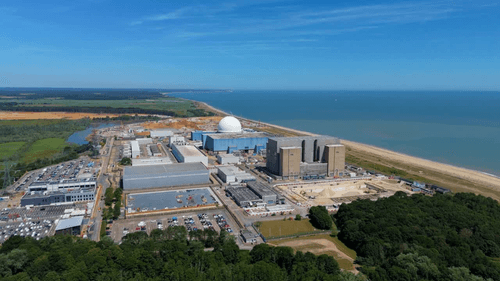
Across the UK, this major nuclear new build programmes are already underway. Hinkley Point C is in active construction and has become one of the largest infrastructure projects in Europe. Sizewell C is moving into its next phase, preparing for major construction activity. Alongside this, programmes such as Small Modular Reactors, including the Rolls-Royce SMR, and the STEP fusion programme are progressing and will introduce additional projects and supply chains across the UK.
Projects like these involve far more than housing a nuclear reactor. They include marine works, cooling systems, large reinforced concrete structures, turbine halls, substations, transport infrastructure, accommodation facilities, and complex digital control systems.
This scale and complexity necessitate thousands of roles across engineering, project delivery, construction, digital systems, and operations. Much of that demand is met by people entering the sector for the first time.
If you’re new to the sector, it helps to understand how these projects are structured and where different skills come into play. For an overview of the nuclear sector and its career pathways, read our guide to UK nuclear careers.
Types of nuclear new build jobs
So where do you actually fit into all of this?
Nuclear new build programmes teams still look very similar to those on other large infrastructure projects, just operating within a different environment. It can help to break these projects down by the types of roles they actually require to understand where you might fit.
Engineering roles
Engineering sits at the core of new nuclear build projects. Civil engineers design and deliver major structures, mechanical engineers work on plant systems, electrical engineers manage power infrastructure and instrumentation, and nuclear site engineers and control experts manage complex operational systems.
The difference is applying those skills within a more regulated environment. There is strong demand for engineers who are used to working in complex, safety-critical environments, particularly those coming from major infrastructure, energy, oil and gas, or defence projects.
Project delivery and commercial roles
Nuclear new build programmes operate at the scale of megaprojects. Project planners, programme managers, commercial managers, contract managers, and project controls professionals all play a key role in keeping delivery on track.
People often transition into nuclear through these functions, bringing experience from other large-scale projects. Where managing timelines, budgets, and complex supply chains is already part of the day-to-day.
Construction and site-based roles
Construction is where workforce demand is most visible. Structural works, logistics, heavy lifting operations, quality assurance, and site management all contribute to delivering large-scale infrastructure on site.
Many of these roles are filled by professionals with backgrounds in construction, civil engineering, or major infrastructure projects, bringing experience that transfers directly into the nuclear environment.
Digital and systems roles
Modern nuclear infrastructure projects rely heavily on digital systems. This includes simulation environments, control systems, cyber security, and digital monitoring tools used throughout both construction and operations.
Digital and system roles are becoming increasingly important as projects integrate more advanced monitoring and operating systems.
Supply chain and procurement
Behind every nuclear new build programme is a large and complex nuclear supply chain. Procurement specialists, logistics professionals, manufacturing teams, and commercial specialists ensure services, materials, and components are delivered on time and to specification. For those with experience in supply chain or vendor management, this sector is a key area where skills transfer directly.
Health, safety and compliance
Nuclear projects also rely on a wide range of support roles, which are often less visible but equally critical to delivery. Health and safety, quality, environmental management, onboarding, screening, and workforce planning are all essential to keeping projects compliant and operating safely.
Roles you might not expect
Some roles on nuclear projects sit outside the areas people typically associate with the sector. On projects like Hinkley Point C, teams include marine specialists managing offshore logistics and environmental experts protecting habitats.
It’s a much broader workforce than most people expect, with opportunities extending well beyond traditional engineering or construction roles. If your experience sits outside traditional nuclear roles, there may still be a clear place for it within the wider project.
Where these roles sit across a nuclear project
Nuclear new build projects develop over long periods of time, taking 15 to 20 years from early planning through to operation. As each phase progresses, the type of work changes, and so does the mix of roles required.
Workforce demand on nuclear projects does not increase gradually; it builds in stages. Often accelerating quickly once construction activity expands. Early development teams may involve a few hundred specialists focused on planning, design, licensing, and regulatory work.
As projects move into main construction, that number increases significantly. This pattern has already been seen on Hinkley Point C. As construction moved from early works into full delivery, workforce demand increased rapidly, with thousands of people required onsite to run civils, mechanical and electrical, construction, logistics, and project delivery in parallel.
A similar pattern is now emerging at Sizewell C. The site workforce has already grown to more than 2,000 people per day as activity has progressed, with further increases expected as additional phases begin to overlap. During peak construction, projects of this scale can require around 10,000 thousands of workers on-site. This is a defining feature of a new nuclear build.
Once a nuclear new build programme moves beyond construction, roles shift towards testing, commissioning and operational readiness, followed by long-term opportunities in maintenance, compliance and plant support once stations are running. This means there isn’t a single entry point. Opportunities open up at different stages depending on your experience and where nuclear projects are in their lifecycle.
Moving into nuclear from other industries
Because opportunities open up at different stages of a project, many people enter nuclear during periods of construction and delivery, bringing experience from other industries. The transition itself is often more straightforward than expected. In many cases, people move into similar roles to the ones they’ve already been doing, but within a different project environment.
Common transition paths include:
Oil and gas engineers moving into energy infrastructure projects
Defence and aerospace engineers transferring safety and systems expertise
Construction professionals moving from transport or infrastructure projects
Digital specialists working on control systems and simulation platforms
Location is also an important factor to consider. Nuclear new build sites such as Sizewell C and Hinkley Point C are based outside major cities, which can involve working on-site or relocating closer to the project. For many, this brings a different kind of experience. You’re closer to the delivery of major infrastructure, working alongside large multidisciplinary teams and seeing progress as it happens.
For many, that is part of the appeal. You’re building experience in real time, working alongside specialists from different disciplines, and contributing to something you can physically see taking shape. It’s a different pace and a different kind of visibility on projects that will operate for decades.
Early career routes into nuclear
Nuclear new build is focused on building a future workforce just as much as it is about hiring experienced professionals. This means the sector is actively opening up to new talent. There is also a growing focus on improving workforce diversity and creating more inclusive entry routes into the industry.
Projects such as Hinkley Point C have already trained thousands of apprentices; Sizewell C will support significant training, apprenticeship, and graduate opportunities as construction progresses.
For those earlier in their careers, these routes offer the chance to gain experience within a live national programme from the outset. This often includes structured training and exposure to site environments and technologies, all alongside the opportunity to work with experienced teams across a wide variety of disciplines.
Over time, that experience can open up different pathways across the different phases of a nuclear new build programme, so you’ll have opportunities to progress with the programme as it moves from construction through to commissioning and long-term operations.
Why the nuclear workforce will keep growing
The demand for nuclear skills is not being driven by a single project. It reflects a broader pipeline of work across the UK future energy systems as part of the wider energy transition. Where new nuclear stations are being developed alongside emerging technologies such as Small Modular Reactors and fusion programmes, like STEP.
Projects like Hinkley Point C and Sizewell C sit within this wider programme. While each project runs over decades, they also overlap with one another, creating continuous demand across different phases.
For many people, this points to a career path more stable than a short-term hiring cycle. Experience gained on one project can carry across to the next. That longer lifecycle supports ongoing roles in maintenance, compliance, upgrades, and plant support long after construction ends.
Find your place in nuclear new build
Nuclear new build isn’t limited to those who have built their careers in the sector. No matter if you already work in nuclear or are exploring how your experience could transfer, nuclear new build offers the opportunity to work on some of the UK’s most significant infrastructure projects.
At Rullion, we support organisations and supply chain partners across the nuclear sector, helping connect people to opportunities across major projects like Hinkley Point C, Sizewell C, and the STEP fusion programme.