UK utilities hiring challenges employers cannot ignore in 2026
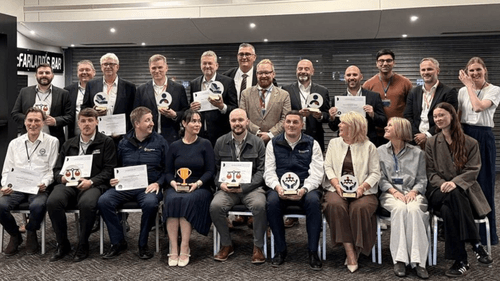
A couple of years ago, most discussions within the energy and utility landscape centred on targets and long-term ambition. At the Future of Utilities Energy Transition Summit, what stood out most was how much the conversation has shifted.
Today, the conversation across the energy transition is far less about targets and far more about delivery, infrastructure, and workforce capability.
UK utilities hiring is becoming one of the biggest risks to infrastructure delivery across the energy sector. Energy infrastructure projects, national power grid upgrades, and major energy transition programmes are all moving into delivery at the same time. However, many organisations are now facing the same challenge: projects are ready to move forward, but the utilities workforce required to deliver them is not in place early enough.
The energy transition is no longer just a policy or technology challenge. It is increasingly a workforce planning, skills and delivery challenge across the entire energy infrastructure sector.
Organisations that address UK utilities hiring and workforce planning early will be in a much stronger position to deliver projects on time and at scale.
Why grid pressure and energy security are now driving hiring demand
The industry has spent years talking about decarbonisation targets, but energy security and affordability are now major drivers of investment and infrastructure upgrades.
For UK employers, this is changing the hiring landscape. National power grid modernisation and wider energy infrastructure projects require highly specialised engineering, commercial and project delivery capability. These are not new skillsets, but demand is now outpacing supply across the utilities workforce.
Projects are not slowing down because ambition or funding is missing. They are slowing down because the right people are not in place early enough.
This is leading to:
- Longer time to hire for critical infrastructure roles
- Increased competition between utilities, consultancies and contractors
- Greater reliance on contingent or project-based talent
- Growing pressure on utilities recruitment teams to secure talent earlier in the project lifecycle
One statistic discussed at the event highlighted how quickly change can happen once economics shift. In China, around 50% of new cars sold are now electric vehicles, not primarily because of sustainability policy, but because electric vehicles have become the most economically viable option.
As James Saoulli, CEO noted during discussions at the event: “If you want to drive change, you often have to start with the consumer and the economics. When it becomes the most viable option, that’s when things really start to move.”
The same principle applies to energy infrastructure and the national power grid. Once technology becomes economically viable and scalable, adoption accelerates quickly, increasing pressure on infrastructure delivery and the utilities workforce needed to support it.
Energy system complexity is rising faster than talent pipelines
The UK energy system is becoming significantly more complex. The national power grid is now managing renewable generation, distributed energy, battery storage, electric vehicles and new nuclear capacity, all while maintaining energy security and affordability.
This complexity is changing the types of roles organisations need within the utilities workforce. Employers increasingly need professionals who can operate across engineering, commercial, regulatory and digital environments rather than within narrow specialisms.
Pierre Morvan, Head of Client Services EMEA, shared at the Future of Utilities event: “You’re also seeing new people coming into the space, learning and engaging, which is great. But more importantly, nuclear is taking on a new role within the energy mix. It’s becoming more directly connected to end users, rather than just acting as a link to the grid.”
Talent pipelines have not evolved at the same pace as energy infrastructure projects. This is contributing to the UK skills gap and widening the talent shortage across the utilities sector.
Utilities recruitment teams are increasingly looking for:
- Engineers with commercial awareness
- Commercial specialists who understand infrastructure constraints
- Project managers with energy infrastructure experience
- Digital and data specialists working within utilities environments
The issue is not always a lack of people. Often, it is how organisations define roles and how they access talent from adjacent sectors with highly transferrable skills, such as rail, national infrastructure, construction, and technology sectors.
Digital and AI capability is becoming core infrastructure in utilities and energy projects
Digital capability is now core to energy infrastructure and utilities operations. Asset data, forecasting, AI and digital platforms are becoming central to how the national power grid operates and how utilities companies plan infrastructure investment.
This creates another utilities recruitment challenge. Utilities organisations are now competing with technology companies, financial services and other sectors for digital and data professionals.
As a result, the utilities workforce is changing. Utilities companies are no longer just infrastructure organisations. They are increasingly digital, data and technology organisations. This shift is changing how organisations approach utilities recruitment, workforce planning and long-term capability development.
Another major theme across the Future of Utilities discussions was the changing role of the consumer in the energy system. Smart homes, solar, battery storage and electric vehicles are turning households into energy producers as well as consumers, with the ability to generate electricity and sell it back into the grid.
James commented, “One of the most interesting sessions was hearing how homes will increasingly become energy producers rather than just consumers. This is extremely exciting!”
This shift towards distributed energy, smart systems, and digital infrastructure means the utilities workforce of the future will need a much broader mix of engineering, digital, commercial, and data skills.
The workforce conversation is changing, whether employers are ready or not
One of the biggest shifts across the industry is how organisations are rethinking what a “skills shortage” actually means. Often, it is not simply a lack of people. It is how narrowly roles are defined and how rigid hiring criteria have been applied.
The conversation is slowly shifting from talent shortage to talent access, development and workforce planning. Some organisations are addressing the UK skills gap by investing in training and development programmes to build capability rather than waiting for fully experienced candidates to become available.
This is leading to more organisations:
- Hiring from adjacent infrastructure sectors
- Investing in training and development
- Building internal capability rather than relying only on external hiring
- Improving workforce planning linked to project timelines
- At the same time, ageing workforces, immigration policy changes, and global competition for technical talent mean organisations will need to be more creative in how they build their workforce over the next decade.
What this means in practice
What’s coming through consistently in the conversations we’re having is that hiring is still happening too late in the cycle. Teams are being built once projects are already underway, which is where delays start to creep in. By the time the gap is visible, the timeline is already under pressure.
Bring workforce planning forward
The organisations moving fastest are approaching this differently. They are mapping hiring against project timelines from the outset, rather than reacting once delivery has already started.
That shift is important because it exposes another issue. When hiring is left too late, employers tend to fall back on very narrow role definitions in an attempt to reduce risk. This often makes roles harder to fill and slows things down further.
Hire for capability, not just background
There is a growing gap between how roles are defined and what the work actually involves.
Projects now cut across technical and commercial boundaries, but hiring is still often based on tightly defined, role-specific experience. That mismatch is limiting access to talent.
What we are seeing work is a shift towards capability. Employers that are open to transferable skills are accessing a much broader pool of people who can operate across that complexity, particularly when the right support is in place.
Build capability, not just buy it
There is still an assumption in parts of the market that the external talent pool will meet demand. For many specialist roles, that simply isn’t happening at the pace required.
The organisations making progress are addressing this by building capability alongside hiring. That includes bringing people in from adjacent sectors and developing them to meet project requirements, rather than waiting for fully formed candidates to appear.
This approach is helping teams become less dependent on an already stretched external market. We explored this in more detail in a recent webinar on reframing talent shortages.
Embed digital into core teams
A similar pattern is playing out with digital capability. In many organisations, it still sits alongside delivery rather than within it. That creates a disconnect between the tools being developed and how projects actually run. Where digital capability is embedded into core teams, it is improving decision making and helping projects move more efficiently. Where it isn’t, the impact is far more limited.
The Future of Utilities
The energy transition is often discussed as a technology or funding challenge, but increasingly it is becoming a workforce and delivery challenge.
Across the UK and Europe, energy infrastructure investment and national power grid upgrades are all happening at the same time, and UK utilities hiring and workforce planning across the energy sector will be major factors in whether projects are delivered on time.
Pierre shares, “What’s clear across Europe is that there’s strong agreement that renewables and nuclear are both key parts of the future. Even here in Amsterdam, speaking to companies from across Europe, you can see the same challenges and the same opportunities being discussed everywhere.”
There is a lot of opportunity in the sector right now. That came through strongly last week. It remains one of the most attractive and meaningful areas to build a career. But the organisations that will succeed over the next decade will be the ones that treat workforce planning and capability development as a core part of their workforce strategy, not a downstream problem to solve once projects are already underway.
Because increasingly, projects are not delayed by funding or engineering challenges. They are delayed because the right teams are not in place early enough.
Workforce strategy is becoming infrastructure strategy.