Why nuclear education isn’t translating into job-ready talent

PODCASTBy Rullion on 03 April 2026

The UK government’s recent overhaul of the nuclear system has moved focus toward faster build timelines and lower costs, with regulatory changes designed to remove delays that have historically slowed projects down. In parallel, the Nuclear Skills Plan increasing investment in nuclear education, particularly at postgraduate level, with the aim of strengthening the long-term talent pipeline needed to support this acceleration.

This points to an assumption that if more people are trained, the workforce challenge will ease. But conversations across the nuclear industry suggest something more complex. Talent exists and interest in nuclear careers is growing, but there is a disconnect between how talent is developed and how the industry actually operates. As well as narrowed perceptions of the nuclear industry causing potential candidates to rule themselves out long before they’ve ever replied. 


The nuclear skills gap starts at entry level

The nuclear sector continues to face a well-documented skills shortage and ageing workforce, increasing pressure on how new talent is developed. 

While universities produce strong academic foundations, particularly in engineering and physics, graduates are entering nuclear careers with a gap in exposure to the environments they are expected to work in. Nuclear is highly regulated and dependent on site-specific or procedural knowledge. New entrants need time to their translate academic knowledge into real-world capability and operational readiness in these safety-critical environments. 

That gap reflects the nature of the industry itself. As Rani Franovich, VP of Regulatory Strategy at Deep Fission noted during our conversation, much of that understanding is built through hands-on experience alongside operators, technicians, and safety teams on site.


Nuclear careers are wider than STEM alone

Access to nuclear careers is narrower in perception than it is in reality. The way nuclear careers are positioned still leans heavily on nuclear engineering pathways or specialised scientific roles. Whereas nuclear new builds operate as large-scale infrastructure programmes. 

As Rani Franovich, noted, “It takes a village to operate a nuclear power plant.”

That village includes:

  • Construction and skilled trade workers
  • Regulators and policy specialists
  • Project delivery teams
  • Safety and compliance professionals
  • Commercial and support functions

When careers are framed too narrowly, large sections of the workforce never see themselves in the industry at all. Many potential candidates are ruling themselves out long before they ever apply. Making the talent shortage just as much an awareness gap as it is a skills gap.


Interest in nuclear industry jobs isn’t translating into applications

For many, nuclear still feels like a closed field. Highly technical, highly specialised, and only accessible through very specific academic routes. If someone doesn’t see a direct match between their background and that perception, they tend to rule themselves out without exploring further.

That decision is often made before roles are fully understood and transferable skills are even considered.

As Miguel Trenkel-Lopez put it, this isn’t a pure skills shortage. It’s a communication and awareness gap between what the industry needs and how those opportunities are understood.

People with relevant experience in construction, infrastructure, project delivery, or other regulated environments don’t always recognise that their skills apply. At the same time, employers continue to look for candidates who already understand nuclear, reinforcing the idea that prior industry experience is a requirement rather than something that can be developed.

The result is a mismatch on both sides. Talent exists and workforce demand exists. But they are not connecting early enough in the process.


Nuclear capability is built through experience

Nuclear capability isn’t something people arrive with fully formed. As Rani noted earlier, it’s developed over time through doing the job and gaining exposure to the operating environments.

Jenifer Avellaneda’s path into nuclear reflects that. Her degree was in sustainable development engineering, not nuclear engineering. Her early exposure came through policy work at the International Atomic Energy Agency, followed by a transition into a technical role in probabilistic risk assessment.

As Jenifer puts it, “you don’t need to be a nuclear engineer to come and work within the industry… We’re a super team here. Everybody’s welcome.”

She describes a process of continuous learning, supported by mentors and hands-on experience. That pattern holds across roles. Supervised operations with simulation-based exercises and emergency drills as well as exposure to real systems build the level of judgement required in nuclear environments.

The main obstacle to building this capability is creating clearer, more accessible entry points that reflect how the industry actually develops talent. That includes early careers routes with structured training in operating environments and lateral entry from adjacent sectors through structured reskilling and deployment models. If hiring continues to focus primarily on those already within the sector, the nuclear industry risks overlooking talent that is already capable, just not yet positioned within it.


Nuclear career pathways are non-linear by design

Once people enter nuclear, movement across roles, organisations and even sectors is common. Careers don’t follow a fixed path. They evolve through exposure and experience as opportunities show up across the nuclear programmes. That flexibility is built into the industry itself.

As Rod Baltzer, Chief Executive Officer at Deep Isolation highlights, many of the skills required in nuclear already exist in adjacent sectors. Areas like oil and gas, construction, infrastructure, defence and other regulated environments all develop capabilities that translate directly into nuclear settings, from drilling and site operations to project delivery and technical oversight.

This cross-sector movement is how the industry builds capability at scale. What can feel like a fragmented or unclear entry point is how the workforce is developed. The challenge is that hiring often doesn’t reflect that. 

Roles are still scoped around prior nuclear experience, even when the capability needed could be developed on the job. A large portion of viable talent remains outside the sector.


Oversimplifying energy systems is distorting the nuclear industry narrative

The way energy is taught has a direct impact on how nuclear is perceived. In many cases, education reduces energy systems to a simple classification: renewable or non-renewable. That framework is easy to teach. It is also misleading.

Miguel Trenkel-Lopez highlights how this binary is introduced early, shaping how young people think about energy before they understand the system as a whole.

Nuclear energy in particular is frequently misrepresented when it is grouped too simply into “non-renewable” alongside fossil fuels in the same category. Without acknowledging, lifecycle emissions, fuel efficiency, waste management, and its role in decarbonisation. It is interconnected, shaped by geography, infrastructure, policy, and demand.


Renewable doesn’t always mean sustainable 

The term “renewable energy” is often treated as automatically “sustainable”, but the two are not the same.

Miguel points to examples where renewable energy can become unsustainable, depending on how it is delivered: “Renewable isn’t the same as sustainable biomass, for example, becomes unsustainable if forests aren’t replanted, and even solar can fall short if its materials or labour practices are harmful. True sustainability goes beyond labels; it’s about long-term environmental impact, resource use, and people and the wider supply chains.”

When considering whether an energy source is sustainability depends on a broader set of factors including:

  • Long-term environmental impact 
  • Resource extraction and supply chains 
  • Land use and ecosystem balance 
  • Labour practices and social responsibility

This wider picture is rarely reflected in early education. The result is a generation entering the workforce with a simplified view of energy, and nuclear positioned incorrectly within it.

Why careers in nuclear need reframing 

The assumption that more education will solve the workforce challenge is understandable. It’s just not enough on its own.

Across the industry, there is no single point of failure. What shows up instead is a gap between how people are developed, how roles are described, how hiring decisions are made, and the experience people need to be job-ready from day one.

Capability in nuclear builds over time. It comes from exposure to real systems, and learning alongside experienced teams on site. Yet many entry points are still positioned as if that experience needs to exist before someone even gets through the door.

This all continues to present nuclear careers as to narrow who sees it as an option. People with relevant backgrounds in construction, commercial, supply chain, infrastructure, or other regulated environments often don’t recognise their place in the sector.

The work isn’t out of reach. It just needs to be described in a way that connects to what they already do. Shifting that starts with how roles are framed and how entry routes are designed. More clarity around where someone fits. More openness to adjacent experience. Better visibility of the types of roles that exist across nuclear programmes. A closer reflection of how capability is actually built once people are inside the industry.

The talent is already there. It just isn’t finding its way in.


Hot off the Grid 

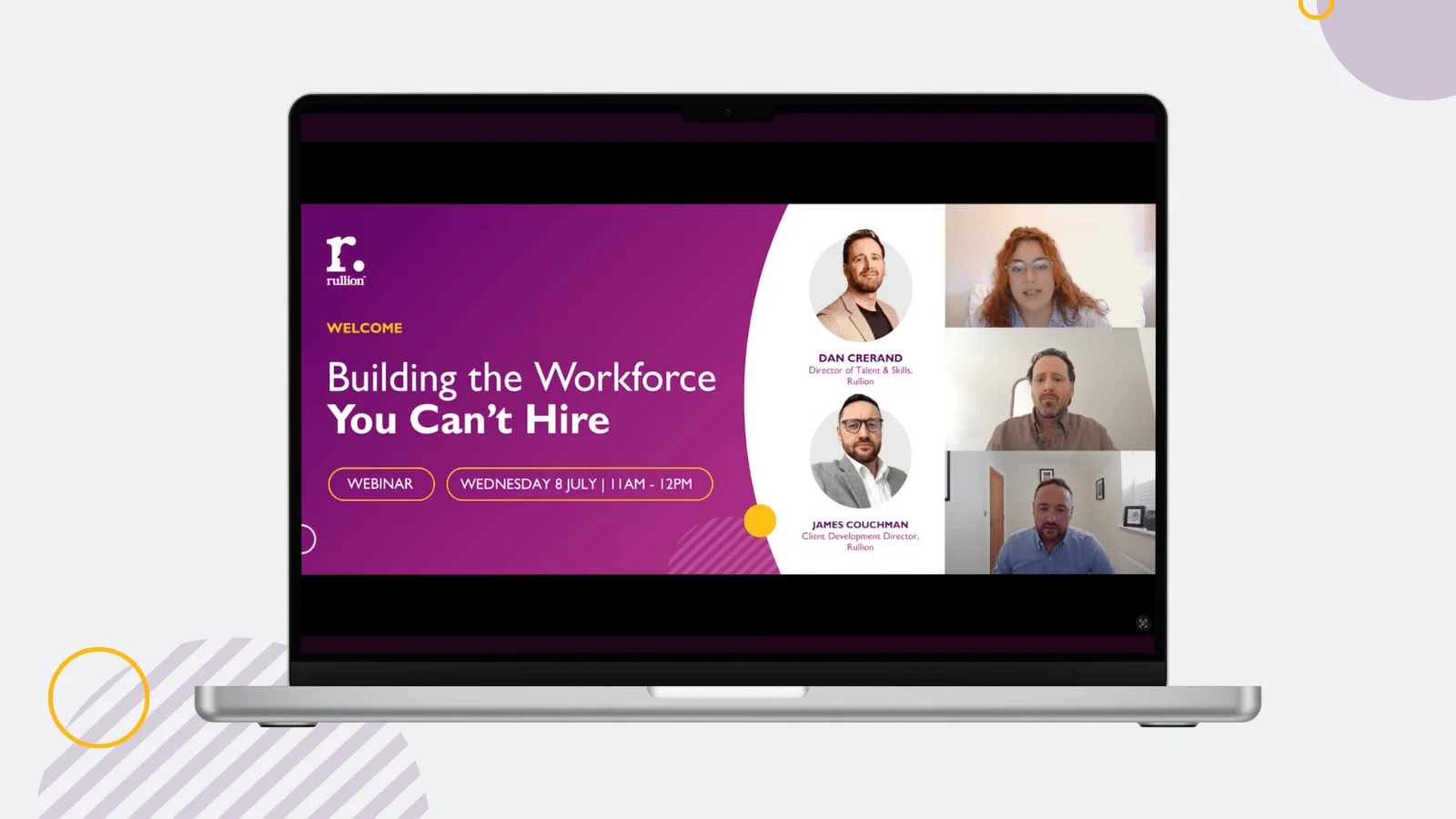
Rullion’s Hot off the Grid series brings these perspectives from in-depth discussions with professionals working across the nuclear industry. From regulation and operations to education and early careers, the same themes continue to surface.


You can explore these in more detail through our YouTube series.

Share
Delivering nuclear projects takes more than technology

At Rullion, we support organisations across the UK nuclear sector with specialist workforce solutions aligned to licensing timelines and major critical infrastructure delivery.

If you're building capability for your next phase of growth, speak to our team.


More like this

NEWS
Rullion joins Rail Forum to support rail recruitment

Rullion joins Rail Forum to support rail recruitment

Rullion has joined Rail Forum, strengthening its connection with the UK rail industry at a time when workforce demand, skills availability and project delivery pressures continue to shape the sector. The membership supports closer collaboration with industry partners and reflects a shared commitment to developing a skilled and sustainable rail workforce. James Saoulli, CEO at Rullion, said: “Rail has a major role to play in the UK’s long-term economic growth, and there is clear momentum behind the sector. Significant investment, increasingly complex programmes and growing workforce demand mean organisations will need strong delivery partners and access to specialist skills more than ever. Joining Rail Forum reflects our commitment to staying close to the challenges and opportunities shaping the industry and continuing to support rail organisations with the workforce expertise needed to keep critical programmes moving.” Rail Forum’s role in the UK rail sector Rail Forum is a national rail industry body representing organisations across the full supply chain. It brings together operators, suppliers and partners to collaborate on the issues shaping the sector, from skills and workforce development through to delivery and investment. Supporting industry collaboration and workforce development Joining Rail Forum allows Rullion to be part of the wider industry conversations around skills, workforce planning and project delivery. These challenges are becoming more interconnected, particularly as rail programmes rely on a mix of permanent teams, contingent labour and specialist suppliers operating across different stages of delivery. Strong collaboration between rail recruitment agencies, suppliers, and operators will be essential to support delivery and long-term growth. James Couchman, Rail Director at Rullion, said: “We are pleased to be joining the Rail Forum and welcome the enhanced visibility it provides. We look forward to developing valuable partnerships and exploring collaborative opportunities within the sector.” Rullion’s experience in rail recruitment Rullion has extensive experience delivering workforce solutions across the rail sector, including market-leading MSP and RPO solutions, with strength in rolling stock recruitment alongside rail infrastructure and operational support. Over the past two years, Rullion has delivered more than 1,100 placements, supporting clients to access the specialist skills needed to keep projects moving. Rullion’s experience in rolling stock recruitment continues to support some of the UK’s most complex fleet and maintenance programmes. Expanding access to rail talent across key markets Alongside its core rail recruitment solutions, Rullion continues to invest in initiatives that support long-term workforce development. This includes programmes such as Train to Deploy and early careers, which are designed to build new talent pipelines and address skills shortages across the sector. Rullion also supports international recruitment across key European rail markets, including Germany, the Netherlands and Ireland, helping clients access specialist skills where local availability is constrained. Joining Rail Forum reflects Rullion’s continued focus on supporting the rail sector’s evolving workforce needs. As investment and delivery demands increase, collaboration across the rail industry, workforce partners and wider supply chain will play an important role in building a more resilient and sustainable rail workforce.

By Rullion on 11 May 2026

NEWS
Rullion Appointed Stadler Rail RPO Workforce Solutions Partner

Rullion Appointed Stadler Rail RPO Workforce Solutions Partner

Rullion has been appointed as the exclusive RPO hiring partner for Stadler Rail in the UK, deepening a transport and rail recruitment relationship built across one of the sector's most diverse operator portfolios. The partnership now supports hiring across permanent, contract and fixed-term roles as Stadler continues to grow its presence across the UK network. The appointment covers recruitment for a range of skilled technical disciplines across Stadler's UK operations and customer contracts: Systems Technicians Modifications Technicians Warranty Technicians Stadler's UK footprint spans intercity and regional rail, urban metro systems and freight, including Greater Anglia, Wales & Borders, Merseyrail, Tyne & Wear Metro, Glasgow Subway and GB Railfreight's Class 99 fleet. Importantly, Stadler operates as a full-service supplier covering rolling stock manufacture through to in-service transport and rail fleet maintenance, and the RPO partnership is structured to support workforce needs across that entire model. Rullion's recruitment capability spans both mainline rail and urban transport networks. Find out more about our transport recruitment solutions. James Couchman, Rail Director at Rullion, said: "Stadler Rail has a significant and growing presence across the UK rail network, and being chosen as their exclusive RPO partner reflects the trust that leading rail organisations place in us to deliver in complex, safety-critical environments. The focus now is on supporting their long-term success by attracting high-quality transport and rail talent across the disciplines their teams need to maintain fleets and keep vital services running." The move to an exclusive RPO model reflects the confidence Stadler has placed in Rullion's ability to deliver consistently across varied and technically demanding environments. Stadler's spread across intercity, metro and freight means the work demands genuine breadth; each operating environment brings its own technical requirements and candidate profiles. That breadth is what sets Rullion's approach to RPO rail recruitment apart from generalist hiring. Rullion is the UK number one rolling stock recruiter, with more than 1,100 placements made over the last two years. Find out more about our rail recruitment solutions for rolling stock.

By Rullion on 07 May 2026

NEWS
Nova Workforce Solutions launches to simplify how external workforces are managed across nuclear, utilities and transport

Nova Workforce Solutions launches to simplify how external workforces are managed across nuclear, utilities and transport

Rullion and Allegis Global Solutions announce the launch of Nova Workforce Solutions, the result of an alliance between both organisations that introduces a new unified model designed to simplify how critical infrastructure organisations buy, manage and deliver external workforces and outsourced services. Created to address a long-standing gap in the market, Nova Workforce Solutions gives medium-to-large nuclear, utilities and transport organisations a single, consistent way to manage contractors, temporary labour, specialist suppliers and outsourced services. The model is particularly suited to critical infrastructure organisations where complex supply chains, large workforces, specialist skills demand and delivery risk require a more joined-up approach. Many organisations have historically had to choose between providers with strong workforce delivery expertise or those with established outsourced services capability. Nova Workforce Solutions has been designed to remove that compromise through one model, one route and one accountable approach. Its single front-door model routes each requirement to the right solution, helping reduce fragmentation and improve visibility, governance and decision-making across workforce and services spend. The launch comes at a time of significant long-term investment in energy, transport and national infrastructure, with governments and private enterprise committing substantial capital to modernisation, resilience and net zero programmes over the coming decade. With spend, value and efficiency high on the agenda for procurement and business leaders, Nova Workforce Solutions is designed to help organisations unlock up to 20% cost optimisation opportunities across the external workforce. Nova Workforce Solutions is already supporting delivery within a multinational energy business, demonstrating the model in a complex and controlled environment. Commenting on the launch, James Saoulli, CEO of Rullion and Founder of Nova Workforce Solutions, said: “The requirements from an MSP have evolved for critical infrastructure organisations. They realise value through managing the entire extended workforce, including highly specialised contingent workers and services providers under Statement of Work arrangements.   Organisations operating in these environments have historically had to compromise by choosing either deep sector experts, or organisations with the scale, breadth, governance, and data capabilities to deliver a world‑class MSP and services procurement. The reason Nova Workforce Solutions is such a bright idea is because it eliminates the need for compromise and offers organisations within critical infrastructure the best of both worlds.” Simon Bradberry, Vice President for International Markets (EMEA and APAC) at Allegis Global Solutions, added: “The requirements from an MSP have evolved for Critical Infrastructure organisations. They realise value through managing the entire extended workforce, including highly specialised contingent workers and services providers under Statement of Work arrangements. Organisations operating in these environments have historically had to compromise by choosing either deep sector experts, or organisations with the scale, breadth, governance, and data capabilities to deliver a world‑class MSP and services procurement. The reason Nova is such a bright idea is because it eliminates the need for compromise and offers organisations within Critical Infrastructure the best of both worlds.” Nova Workforce Solutions will be showcased at the CWS Summit Europe in London in May 2026, where the alliance will meet buyers and industry leaders responsible for workforce, procurement and business transformation. For more information, visit novaworkforcesolutions.com.

By Rullion on 29 April 2026