From Fukushima to Hinkley: An Engineer’s Journey into Nuclear

PODCASTBy Rullion on 30 April 2025

The nuclear sector is entering a new chapter, driven by ambitious climate goals, energy security needs, and a growing demand for technical skills. At the heart of this transformation are the people bringing it to life, often with stories as compelling as the infrastructure they help build. 

In this episode of Hot off the Grid, Sibel Akel, Rullion’s Marketing Director, speaks with Juliette Martin, a Plant Layout Engineer at Hinkley Point C (HPC). They cover everything from Juliette’s international upbringing to her current role on one of Europe’s most iconic nuclear projects. This blog dives into their conversation, exploring what makes nuclear such a rewarding (and often misunderstood), career path, particularly for engineers, women, and early-career professionals.

A Global Start, a Local Impact 

Juliette’s story begins in Japan and Hong Kong, where she spent much of her childhood. She experienced the aftershocks of the Fukushima disaster as a young girl, though at the time, she says, she didn’t fully grasp the scale of it. 

Her interest in science and climate came later, sparked by visiting researchers who spoke at her school in Hong Kong. Their work, collecting plankton samples by sailboat to study climate change, caught her imagination. That moment set her on a course toward engineering. 

After studying in France, Juliette joined an energy-focused school in Grenoble. There, a nuclear introductory course changed everything. “After the first lesson, I was hooked,” she says. Passionate lecturers and access to real-world projects made the subject come alive. The school’s location in a hub of nuclear research and development only deepened her interest. 

Landing a role at EDF 

Juliette’s first industry experience came via France’s VIE (Volontariat International en Entreprise) programme - a government initiative that places young professionals abroad. It was her way into EDF and, ultimately, into the UK nuclear sector. 

She joined Hinkley Point C as part of the technical team supporting construction. “I wanted something hands-on, something on-site,” she says. “This was the perfect fit.” 

Working inside the heart of the plant, what Juliette calls “the guts”, she helps ensure components are installed correctly. Additionally, she supports repair decisions, and contributes to equipment readiness. It’s a job that gives her a front-row seat to one of the most complex builds in Europe. 

A Project the Size of a City 

With more than 14,000 people working around the clock, HPC is its own ecosystem. For Juliette, the scale of it all reveals just how many paths exist within the industry. 

“There are roles and services here you’d never expect to find on a construction site,” she explains.

There’s a huge mix of backgrounds and companies. The opportunities are endless.” 

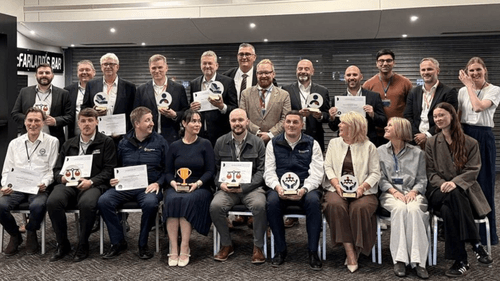
One of her favourite memories comes not from a milestone lift or technical challenge, but from an internal initiative. Her manager encouraged the women in her team to enter the Fem’Energia awards, which recognise women in the nuclear industry. Together, 11 women formed a team and submitted an application. “It was like building a football squad,” she jokes. 

But it was more than a submission. It became a rare chance to slow down, connect, and share stories. “We never usually have time for that. It brought us closer.” 

A Voice for Women in Nuclear 

Juliette’s involvement in the sector goes far beyond her day job. She’s a European representative for Women in Nuclear’s Young Generation group, helping to connect and support members across the continent. Through this work, she’s organised webinars, shared career opportunities, and mentored young people exploring the industry. 

That advocacy work also led to a surprise invitation to speak at a nuclear finance event in New York. “It was completely unexpected,” she says. “I’d met someone from the IAEA in Vienna who was impressed by our presence as young women on site. Six months later, I got the call.” 

Despite nerves, the experience was a success. “I was stressed at first, but once I was up there, it felt like just another meeting room. Afterwards though, I was shaking!” 

Changing Perceptions, One Conversation at a Time 

Juliette is well aware of the public perception challenges nuclear faces. She believes soft skills are as important as technical expertise when it comes to changing hearts and minds. 

“We need to show people the human side of nuclear,” she says. “We’re not villains from a film. We’re professionals doing work that matters.” 

She prefers conversation over confrontation. “If people have questions, I answer them. But sometimes, I don’t even mention nuclear straight away. I just say I work on a construction site. And when people find out it’s nuclear, they’re often surprised - in a good way.” 

Looking Ahead 

When asked about the future of nuclear, Juliette’s optimistic. She sees more innovation, more global partnerships, and more opportunities for young professionals. 

There’s a lot happening in France - support for start-ups, international deals like the one with India. There’s real momentum,” she says. “And not just for engineers. We need people from all backgrounds; mechanical, HR, policy, and welding. Everyone has a role to play.” 

If she had a magic wand? “I’d build more plants. Everywhere. Everyone needs energy.” 

Powered by People 

Juliette credits much of her success to the mentors and managers who guided her. “My first manager was calm and thoughtful. The next was technical and passionate. Now I work with two incredibly strong women who support me and lead by example.” 

In a sector often seen as closed-off or male-dominated, stories like Juliette’s remind us that nuclear is changing, and that people like her are leading the charge. 

Conclusion

Juliette Martin’s journey shows what’s possible when opportunity and passion meet. From her early interest in climate science to working inside the UK's biggest nuclear project, her story is one of purpose, resilience, and people. 

Explore more insights from Hot off the Grid or get in touch to see how we can help you build a future-ready workforce.
 
Watch the full interview below: 
 
🔗 Connect with Juliette Martin on LinkedIn 
🔗 Connect with Sibel from Rullion on LinkedIn 


Share
Powering the future of Nuclear starts with people

At Rullion, we work with pioneering organisations across the UK nuclear industry to find, attract, and support the people who are driving change. Whether you're scaling new technologies, meeting regulatory milestones, or shaping the next generation of clean energy jobs in the UK, we're here to help.

More like this

BLOG
How is MHHS impacting the energy workforce?

How is MHHS impacting the energy workforce?

For several years, industry planning has included the Market-wide Half-Hourly Settlement (MHHS) as part of the larger UK energy market reform. The deadline for May 2027 remains in place, and with central systems achieving readiness in 2025, meters are now being integrated into the new settlement model. To continue operating under the current settlement arrangements, organisations are currently figuring out how to integrate their current platforms into the MHHS infrastructure. Jump to: MHHS reaches far beyond settlement Where programmes are feeling the strain How hiring conversations are evolving Broadening where capability comes from Preparing for MHHS workforce demand MHHS reaches far beyond settlement The majority of the definitions surrounding MHHS emphasise the transition from estimated usage to precise, half-hourly readings. That description merely reflects the result. The underlying shift is how this change in settlement is supported. Electricity consumption is measured every 30 minutes based on actual data, not on profiles or estimates. Systems designed for periodic updates now need to handle continuous streams of information, with far less tolerance for delay or discrepancies. Data flows between organisations and needs to stay consistent at every stage to prevent errors in settlement. This is where energy system integration becomes essential. As information no longer sits within a single platform or team, effective coordination is required across independently managed systems, each presenting unique constraints around data formats, settlement timings, and the validation processes prior to submission. The act of consumption itself evolves into a more dynamic experience. Metrics like average household electricity consumption or average UK home electricity consumption are no longer fixed reference points. Data collected every half hour reveals how usage varies throughout the day, directly influencing forecasting models and operative decisions. Where programmes are feeling the strain MHHS programme teams are scaling while still working through the intricacies that only emerge as systems begin interacting. Dependencies between internal platforms and central MHHS infrastructure are becoming clearer during testing, where data needs to be exchanged, validated, and accepted within defined time windows. Data handling stands out as a significant pressure point. Half-hourly settlement depends on precise, high-frequency data streams, which existing systems are not always designed to support. In many cases, such pressure leads to projects for reworking parts of the architecture instead of simply building upon existing infrastructure. Especially relevant where data infrastructure and quality have been identified as potential risks within the transition to MHHS. The settlement and billing processes still need to function smoothly, even as new strategics are introduced and tested alongside them. This means operational teams are working within both models at once, adding to the existing workload for processes that already depend on a small pool of specialists. How hiring conversations are evolving With the rise in delivery activity, demand for specific skillsets is becoming easier to pinpoint. There has been a noticeable uptick in hiring for programme leadership, data engineering, and settlement expertise. Roles focused on data governance and system integrations are also gaining traction as organisations move further into managing migrations and various phases. How those roles are defined is starting to influence how quickly they can be filled. Some roles heavily rely on hiring criteria based on prior experience in the energy market, which can unexpectedly limit the candidate pool. As a result, roles frequently stay open for extended periods or fill at a slower pace than programme timelines permit. This places additional pressure on existing teams and slows progress in areas where specialist expertise is already stretched Many of the required capabilities are not exclusive to the energy sector, although they are frequently presented that way during hiring processes. Some organisations are already adjusting how they approach these challenges. Rather than focusing only on direct sector experience, they are bringing in people who have delivered comparable programmes in other environments. Broadening where expertise comes from Financial services platforms handle high volumes of transactional data, making accuracy, reconciliation, and auditability essential. Telecoms programmes oversee infrastructure transformation throughout distributed networks, often coordinating system upgrades while minimising interruptions to live services. In large technology environments, integration teams routinely connect platforms with different data structures, handling mismatches in format, latency and validation rules. These examples align closely to the types of challenges encountered in MHHS delivery: Data engineers who have honed their skills with high-volume transactional systems can apply that expertise to half-hourly data flows. Data governance specialists bring experience in managing data quality and resolving validation exceptions where information does not meet required standards. Programme managers who are used to coordinating complex infrastructure or digital programmes are well-versed in managing dependencies across multiple teams and timelines. Integration specialists often move between sectors, applying their expertise to connect systems that were not originally intended to work together. Transitioning into the energy sector still requires onboarding and familiarity with the operating environment. However, they allow organisations to access capabilities that would otherwise fall outside conventional hiring standards without causing additional delivery delays. There is also increasing interest in structured development routes. Training programmes are being used to build skills in areas experiencing increased demand during phases like testing and migration and the transition into live systems. Preparing for MHHS workforce demand Workforce planning needs to adapt and evolve with the MHHS programme rather than sit alongside it. Each phase presents its own unique set of requirements. Mapping these changes in advance helps reduce reliance on reactive hiring, especially in areas where onboarding takes time. This also allows for different ways of structuring delivery. Some roles are better suited to permanent teams. Others can be delivered through specialist contractors or outcome-based models depending on the nature of the work. Align workforce planning to delivery phases MHHS delivery doesn’t place consistent pressure on the same roles throughout. Workforce demand shifts as programmes move forward, and planning needs to reflect that progression rather than treating hiring as a single, static requirement. In the early stages, work tends to centre around architecture and settlement design. Solution architects define how systems will connect and business analysts translate regulatory requirements into process and system changes. Settlement specialists are also closely involved here, reworking existing processes and identifying where adjustments are needed. As programmes move to system integration testing (SIT), demand shifts. The emphasis moves from design to validation, with data engineers and integration specialists becoming more central as data moves between systems and needs to hold up under settlement conditions. Bringing these systems together safely requires the expertise of both the test managers and environment leads to ensure seamless coordination. The later stages bring different pressures. The rise in migration activity drives a greater need for professionals skilled in data alignment and reconciliation to make sure records match across systems. Operational teams tasked with billing and settlement processes are gearing up to implement innovative strategies while maintaining existing processes. Some roles require continuity where knowledge of settlement processes needs to be retained. Others are more concentrated within specific phases. By structuring workforce delivery around these stages, organisations can bring in support where needed, without the need to expand teams across the entire programme. Delays tend to surface once systems interact at scale Successful integration hinges on coordination across teams working within defined settlement timelines. Delays in one area can quickly affect others. Migration then adds further pressure. Transferring meters and associated data into the new model demands both continuity and accuracy. When additional support is not in place early enough, existing teams absorb the extra workload, which can hinder progress and raise the chances of errors in settlement outputs. MHHS delivery depends on how teams are built MHHS sits within a wider energy market reform, with multiple organisations in the sector progressing through delivery at the same time and often drawing on the same types of experience. The overlap is already influencing the speed of team construction and the onset of progress slowdowns. Identifying these overlaps earlier allows organisations to bring in the right experience before timelines are affected. Once programs reach the integration or migration stages, there is less flexibility to resolve gaps without slowing delivery. This is why workforce delivery is starting to shift. Delivery is less about the technology itself and more about the teams having the right capacity and expertise in place to carry programmes through. Broadening the methods of talent assessment and exploring new avenues for sourcing talent, including bringing in transferable skills from adjacent sectors, can enhance MHHS delivery. The organisations that move with more certainty here tend to be the ones that have built teams to be able to handle the complexity and scale of the change required.

By Rullion on 15 April 2026

NEWS
Rullion joins Energy & Utility Skills to support workforce planning

Rullion joins Energy & Utility Skills to support workforce planning

The UK’s energy and utilities sectors are preparing for a level of infrastructure investment that will require more than 300,000 new workers over the next five years. That challenge is not just about attracting more people into the sector. It is also about how organisations understand the workforce they need, how they access it, and how workforce planning connects to delivery in practice. As investment accelerates, workforce pressure is building across multiple fronts at once. Skills shortages remain well documented, but the challenge extends beyond supply. It also includes visibility, coordination, and the ability to plan across increasingly complex delivery models. Across infrastructure programmes, delivery relies on a mix of permanent teams, contingent labour, specialist contractors, consultancies and supply chain partners, often operating across different stages of the same programme. Workforce planning needs to reflect that reality, rather than focusing solely on traditional headcount. Rullion has joined Energy & Utility Skills  as part of this wider industry focus, contributing a distinct perspective as the only workforce solutions provider in the membership, with insight into how workforce strategies can better reflect the realities of delivery. Why Rullion has joined Energy & Utility Skills Energy & Utility Skills plays a central role in supporting workforce development across the energy, water and waste sectors. Through industry collaboration, workforce research and skills strategy, it brings together employers, partners and policymakers to address long-term capability challenges across critical infrastructure. Rullion has joined as part of that wider effort, contributing practical insight from across the extended workforce. While much of the industry focus is on attracting new entrants and developing skills pipelines, a significant proportion of delivery continues to rely on contingent labour, specialist contractors and external delivery partners. Bringing greater visibility to that part of the workforce, and how it interacts with permanent teams, is an important part of building a more complete view of workforce capability. James Saoulli, CEO at Rullion shared: “We’re proud to join Energy & Utility Skills and to be part of a community focused on addressing one of the sector’s biggest challenges - building a skilled, resilient workforce for the future. As investment accelerates across the energy, water and waste sectors, we believe there is a real opportunity to take a more integrated approach to workforce planning, bringing together both permanent and extended workforce models. We look forward to working with Energy & Utility Skills and its members to support the delivery of the UK’s net zero ambitions.” Workforce planning needs a broader view Much of the workforce challenge sits in the gap between the workforce organisations plan for and the workforce they actually rely on to deliver projects. These programmes are delivered through a combination of permanent teams, contingent workers, specialist contractors and wider delivery partners. Not all of that workforce is equally visible in planning discussions, despite playing a critical role in delivery. This is already becoming more visible across the sector, as organisations respond to growing pressure around hiring, skills access and delivery timelines. While the industry has spent years focused on decarbonisation targets, energy security and affordability are now accelerating investment and infrastructure upgrades. We explored this further in our recent piece on UK utilities hiring challenges employers cannot ignore in 2026. A more complete view of workforce demand allows organisations to plan with greater accuracy, particularly where delivery models are layered, timelines are long, and competition for skills is increasing across the market. Bringing insight from delivery environments Rullion brings more than 45 years’ experience supporting organisations across energy and utilities, working alongside companies including EDF Energy, E.ON and Northumbrian Water. That perspective comes from the delivery environment itself. Across major infrastructure programmes, workforce challenges rarely sit neatly within one hiring channel. They tend to emerge across the interaction between permanent teams, contingent labour and external delivery partners. This is where greater workforce visibility becomes important. Understanding where capability sits, how it is being deployed, and how different workforce models support delivery gives organisations a stronger basis for workforce planning. It also helps widen the conversation around skills. Not just in terms of how many people are needed, but how workforce capability is built, accessed and coordinated over time. A more joined-up approach to workforce capability Energy & Utility Skills plays a central role in helping the sector respond to long-term skills and workforce pressures across energy, water and waste. This includes connecting skills strategy more closely to infrastructure delivery, labour market access and future resilience. Rullion’s contribution will focus on practical insight from delivery environments, particularly around the role of the extended workforce and how organisations can take a more integrated view of capability. As the sector works to meet investment, decarbonisation and resilience goals at the same time, collaboration across employers, partners and industry bodies will remain essential. The workforce challenge is already clear. The next step is building strategies that reflect how delivery happens in practice.

By Rullion on 08 April 2026