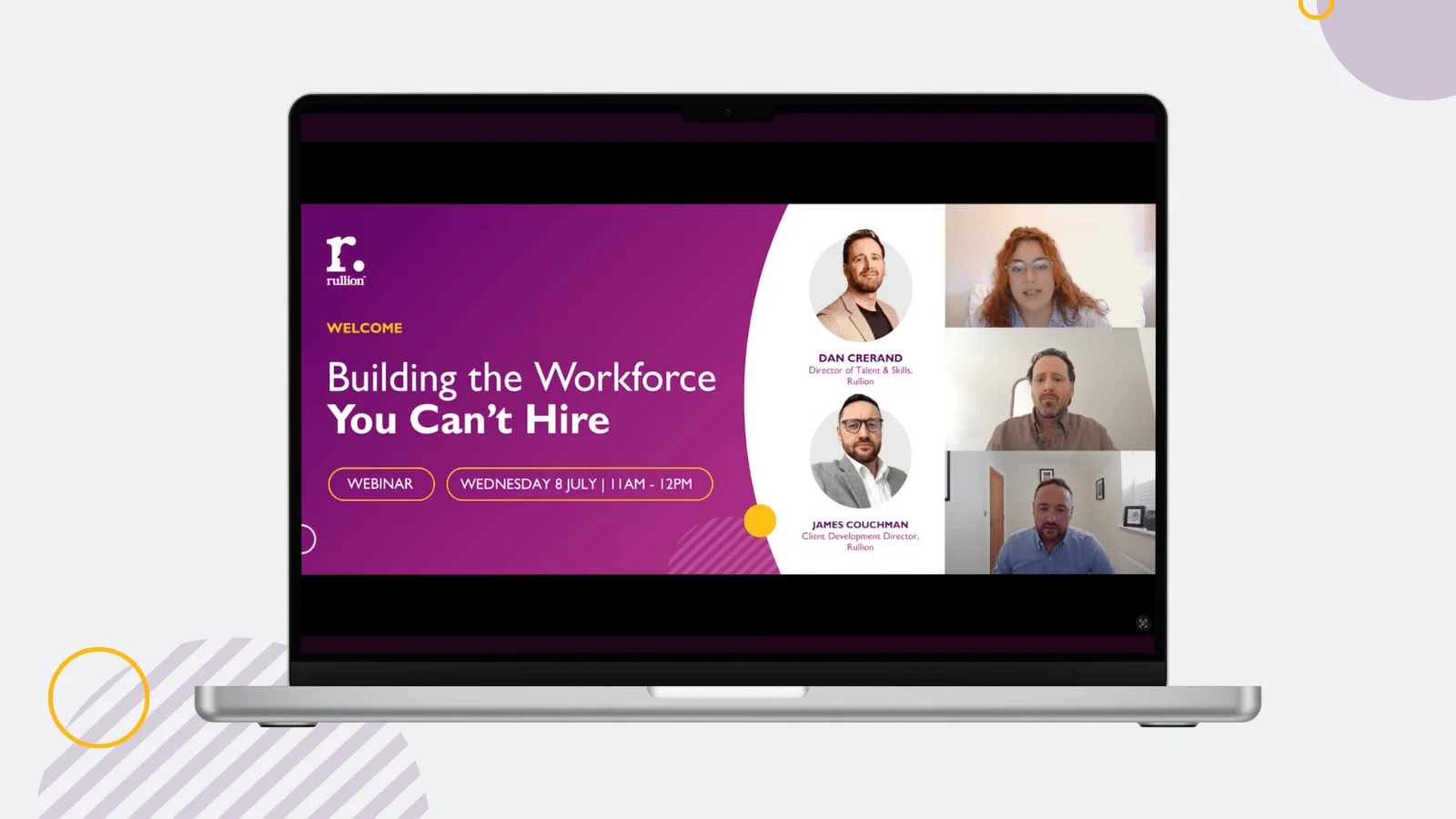
Critical infrastructure organisations have more workforce options available than they often realise
Across critical infrastructure, workforce leaders are being asked to deliver ambitious, long-term programmes while competing for the same limited pools of experienced people. As demand grows and experienced workers retire, the gap between what organisations need and what the market can supply is widening.
The reality is that many of the skills required to support future infrastructure investment cannot simply be bought at the scale, speed, or cost required. Organisations who continue relying solely on traditional recruitment are finding that approach increasingly difficult to sustain.
Register now to explore practical ways to build the skills your organisation can't simply hire from the market.
You'll hear about:
Moving beyond vacancy filling to build genuine workforce pipelines
Creating sustainable routes into critical infrastructure jobs through early careers programmes
How to maximise recent changes to apprenticeship levy funding and advice on integrating apprenticeships into wider workforce planning
Using Train to Deploy to identify and develop potential where experience alone cannot meet demand
Matching the right solution to the right workforce challenge
You'll takeaway:
Skills shortages aren't new. What is changing is how organisations respond to them. This session will share examples of how critical infrastructure employers are diversifying their workforce strategies and creating sustainable routes to the skills they need. You'll gain fresh ideas for building capability, reducing workforce risk and strengthening long-term talent pipelines.
Strengthening workforce planning beyond traditional recruitment methods
Building talent pipelines in priority skill areas
Creating sustainable early careers pathways
Maximising apprenticeship levy funding
Reducing mobilisation risk through upskilling
Anecdotes and real life examples from critical infrastructure organisations
Be part of the conversation
Join us on 8 July, 11am BST
This is a practical, discussion-led session focused on the workforce challenges that matter most to critical infrastructure leaders right now.
If you have a pressing question or workforce challenge you'd like covered, share it when you register. We'll use your input to shape the discussion and answer what matters most to you.
Meet your hosts
Dan Crerand
Director of Talent & Skills at Rullion
Dan leads the development of workforce solutions at Rullion, helping organisations attract, develop and deploy the skills they need for the future. Working across early careers, apprenticeships, upskilling and Train to Deploy programmes, his focus is on helping organisations move beyond traditional hiring models to unlock new sources of talent and build futureproof talent pipelines from within.
He works closely with employers, education providers, training organisations and social mobility partners to develop pathways that are both commercially effective and socially impactful.
James Couchman
Client Development Director at Rullion
James works with leading infrastructure, transport and rail organisations to develop workforce strategies that respond to immediate delivery pressures while building the skills needed for the future. Drawing on more than 20 years’ experience in recruitment and workforce solutions, he brings practical insight into how major organisations are tackling skills shortages and creating more sustainable talent pipelines.
Through his work on complex rail programmes, James has seen how early careers initiatives, apprenticeships, and Train to Deploy programmes can create new sources of talent and support long-term workforce planning. His focus is on helping organisations turn these approaches into practical solutions that work in real-world environments.
The workforce you need may not exist yet. But it can be built.
If you're responsible for workforce planning, talent acquisition, or early careers in critical infrastructure, this session will explore the practical approaches helping organisations build sustainable talent pipelines; moving away from just competing for a shrinking pool of experienced people.