APSCo's MSP Award Shortlist for Rullion x E.ON Partnership

NEWSBy Rullion on 26 June 2025

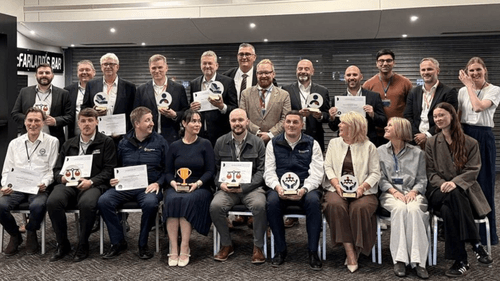
Rullion have been named in the MSP award shortlist "MSP of the Year" at APSCo OutSource Awards for Excellence 2025, celebrating excellence and innovation in recruitment outsourcing. This shortlisting recognises our standout Managed Service Programme (MSP) partnership with E.ON, one of the UK’s leading energy suppliers.

“Making it to the MSP awards shortlist is a real testament to the partnership we’ve built with E.ON. It shows how a truly strategic MSP can make a difference, especially the fantastic work that Tracy, Terrie, and Sinéad did to adapt our MSP model to the needs of a fast-changing energy landscape.”

- Lindsay Harrison, Chief Customer Officer at Rullion

Over the past year, hiring demand across critical infrastructure has reached unprecedented levels. Our work with E.ON is a great example of how to manage a contingent workforce in the energy sector; we’ve delivered measurable results at speed and scale, without compromising on quality or care.


An MSP Model Built for Impact

Our success is based on a people-first, insight-driven delivery model that puts E.ON’s values and evolving needs at the centre. When it comes to managing a contingent workforce, no two clients are the same – and our E.ON solution is a high-touch, fully embedded partnership that delivers on compliance, cost control, agility and cultural fit.

Rather than relying heavily on second-tier suppliers, we’ve implemented a direct fulfilment model that gives E.ON greater control over quality, consistency and cost. Through this, we’ve achieved 100% direct hires. a 2:1 CV-to-interview ratio, reduced time-to-hire by 15%, and improved interview-to-offer conversion by 25%. It’s a delivery model built for today’s critical infrastructure needs and ready to scale.


A Hiring Strategy That Delivers Lasting Results

Across Rullion, we use a behaviour-first hiring strategy. This means we don’t rely solely on experience. We assess candidates based on their potential and alignment with E.ON’s values and culture.

This approach has supported smoother onboarding, reduced attrition, and improved conversion from contingent to permanent roles. In fact, 11% of workers placed via Rullion at E.ON converted to permanent roles, with over 85% retention across the MSP. Engagement has also increased, driven by ongoing development opportunities, wellbeing support, and a personalised, people-first experience.


Outcomes That Speak Volumes

Our bespoke Client Value Framework tracks five key pillars: cost savings, compliance, operational excellence, innovation, and social value. This is how we measure what matters. Here’s how that translates at E.ON:

  • 99% fill rate across the MSP (92% at time of submission): critical roles are filled with consistency and speed, keeping operations moving without disruption.
  • 100% satisfaction in post-hire surveys: every worker placed through our MSP reports feeling supported and set up for success from day one.
  • 100% timesheet accuracy: contractors are paid accurately and on time – building trust, loyalty, and a positive experience throughout the assignment.
  • +60 Net Promotor Score (NPS) from hiring managers: our delivery quality, responsiveness, and embedded team approach are consistently rated as ‘Excellent’ by our clients.
  • 25% improvement in interview-to-offer ratio: we’re enabling faster decisions, stronger shortlists, and more efficient hiring cycles.
  • Over 85% retention across placements: we place the right people, who stay – reducing rehire costs, protecting institutional knowledge, and supporting business continuity.
  • 99% onboarding compliance: our rigorous onboarding standards ensure our clients remain protected and each new starter meets strict regulatory and process requirements. The 1% variance was due to delayed candidate documentation, not process gaps.

These metrics don’t just sit in reports; we use this data to drive continuous improvement – from simplifying onboarding routes to improving IT access and escalation processes. These findings are then reviewed monthly at leadership level and implemented into quarterly business reviews to ensure accountability and momentum.

While our MSP is led through direct fulfilment, we hold our niche supply partners we do work with to the same high standards. We measure their performance with quarterly scorecards and ensure they are aligned to our values. All of our suppliers are to adhere to our Supplier Code of Conduct, and we provide training on inclusive recruitment, host performance clinics, and share best practices to help partners meet standards and grow with us.


A Managed Service Provider for the Future 

Our MSP at E.ON is a standout example of what we do best: high-performance hiring with a human touch, scalable solutions that evolve with business needs, and a shared commitment to inclusion and innovation.

“Rullion is more than a recruitment partner – they are an extension of our team… They’re friendly, enthusiastic, and always translating insight into what really matters for E.ON.”

- E.ON Stakeholder


We’re proud to help critical infrastructure organisations like E.ON through strategic MSP and contingent workforce solutions. 

Share
Have a workforce challenge you need to solve?

If you’re looking for a workforce solutions provider that solves problems today and builds stronger, more inclusive talent strategies for tomorrow, explore our MSP solution or book a discovery call today. 
More like this

Building Workforce Readiness: Train to Deploy vs. Traditional Hiring

Building Workforce Readiness: Train to Deploy vs. Traditional Hiring

If you’re facing urgent capability gaps, recruitment might feel like the fastest fix. But for critical infrastructure organisations, traditional hiring alone doesn’t build the depth or resilience you need. As roles evolve and technical demands rise, hiring needs to shift from finding talent to developing it. This shift is leading organisations to adopt workforce strategies like a Train to Deploy solution, one that’s designed to meet capability challenges at their core. Why Traditional Hiring Falls Short for Critical Roles Even with a strong recruitment function or trusted agency partners, the reality is this: finding the right person for a complex, evolving role is becoming harder. The market is tighter, the skills are more specialised, and the stakes are higher. Here’s what we’re hearing from teams across critical infrastructure: Hiring fills seats, but capability stays static In many organisations, hiring isn’t the problem; capability is. Without structured development, organisations are locked in a cycle of reactive hiring. Short-term gaps get filled, but internal capability doesn’t grow. That creates long-term risk when projects scale or specialist knowledge walks out the door. Filled roles don’t equal work-ready teams Time-to-hire might be improving, but time-to-productivity isn’t. Even experienced hires often face long onboarding, steep learning curves, and gaps in system, compliance, or industry knowledge. Traditional hiring misses high-potential talent When roles are critical and evolving, it’s not always about who’s done the job before. Traditional CV-led hiring often overlooks candidates with the behaviours, learning agility, and mindset to thrive. Without new ways to identify and assess potential, you risk filtering out tomorrow’s best performers before they even get a look-in. Diversity and inclusion efforts stall without new pathways If you’re still using the same hiring channels and criteria, you’ll keep reaching the same talent. That makes it difficult to move the dial on DEI, especially in sectors under pressure to reflect the communities they serve. Truly inclusive hiring takes more than intent; it takes infrastructure. Without new pathways into skilled roles, you limit both who you hire and how you grow. How Train to Deploy Builds Aligned, Work-Ready Talent Instead of recruiting for a role and hoping someone fits, you identify the capability you need and Train to Deploy builds it. Here’s how it works: Match-to-train We identify high-potential individuals based on behaviours, mindset, and learning agility, not just what’s on their CV. This opens up new talent pools and removes the traditional filters that limit inclusive hiring. “We call this inclusion without limits. If someone has the right mindset and behaviours, we build the skillset.” Bespoke, role-aligned training Rather than generic upskilling, TTD pathways are tailored to your business. Meaning training covers the tools, standards, systems, and compliance frameworks your teams use every day. Compliance and day-one readiness From regulated safety training to industry accreditations or project-specific onboarding, readiness is built into the process. No long ramp-up. No onboarding lag. Just hires that are ready to contribute from day one. Deployment into real roles Once trained, talent is deployed directly into your teams. Coaching and mentoring continue through placement to ensure confidence, cohesion, and long-term value. Scalable to match demand Train to Deploy gives you the ability to plan and scale talent pipelines in advance of need. Seasonal peaks? Project launches? Evolving capability requirements? Your workforce is ready to flex without the lag. The Business Impact of a Train to Deploy Strategy The Train to Deploy model provides a fundamental shift in how you build the capability your business needs to deliver today and adapt to tomorrow. Rather than competing for scarce talent, with Train to Deploy you’re able to develop talent on your terms. You gain the ability to grow your own workforce with people aligned to your values, trained to your systems, and ready to contribute from day one. Here’s how a Train to Deploy solution adds value: Faster productivity: role-specific training is delivered up front, meaning new hires arrive work-ready. This significantly reduces onboarding lag and avoids costly ramp-up periods. Improved retention: when you hire for mindset and train for the role, people are more engaged and more likely to stay. That means lower churn and reduced long-term cost of repeat hiring. Inclusive, high-potential pipelines: With a focus on sourcing based on behaviours and potential, not just experience, Train to Deploy opens doors to talent often missed by traditional recruitment. Helping you meet social value, DEI, and ESG targets in a way that’s measurable and sustainable. Reduced contractor reliance: building internal capability ahead of demand reduces the need for short-term, high-cost labour. That gives you more budget control and a more stable, aligned workforce. Strategic workforce resilience: TTD enables you to build flexible, future-fit teams without needing to start from scratch each time. This is great for when you’re looking at scaling for a new project or backfilling retiring expertise. Explore our full guide to building a business case for a Train to Deploy solution to find out more. Recap: How Train to Deploy Drives Workforce Readiness In summary, a Train to Deploy solution builds workforce readiness by combining behaviour-first hiring with role-specific training to deliver aligned, job-ready teams from day one. This workforce strategy helps organisations: Develop talent aligned to real operational needs Reduce time-to-productivity through targeted onboarding Build internal capability for future project demands Improve retention and diversity by hiring for mindset, not just CVs

By Rullion on 17 November 2025

RPO vs Traditional Recruitment: Which hiring model is right for you?

RPO vs Traditional Recruitment: Which hiring model is right for you?

The evolution of permanent recruitment models has been remarkable over the past ten years. The once simple decision between in-house and agency recruitment has evolved into a dynamic landscape saturated with options, all designed to provide organisations with enhanced flexibility, control, and efficiency. The three most common models include Permanent Recruitment, Recruitment Process Outsourcing (RPO), and RPO On-Demand. Each serves a different purpose, but understanding where one ends and another begins can be challenging. Each plays a unique role in the journey of business growth, yet understanding the transition from one to the next can be difficult. This bitesize guide outlines the unique offerings of each model, highlights their differences, and provides insights on selecting the approach that aligns perfectly with your hiring requirements. Click to navigate: What is permanent recruitment? What is an RPO? What is RPO On-Demand? What is Permanent Recruitment? Permanent recruitment, commonly known as perm recruitment, represents the classic agency model that many businesses recognise. This approach focuses on securing permanent employees rather than relying on temporary or contract arrangements. Agencies are often engaged by clients to enhance their internal hiring teams or talent acquisition efforts, either for particular positions or when specialised knowledge is needed. The recruitment agency identifies, screens, and presents candidates for specific roles. It continues to be the preferred choice for organisations in need of flexibility or assistance with specialised positions. Yet, permanent recruitment models vary significantly. Here are the three primary approaches: Contingency: Multiple agencies vie to fill the same vacancy, with payment awarded solely to the agency that successfully places a candidate. This approach emphasises rapid execution and network reach, but it may result in inconsistent quality. Exclusive: A single agency is granted exclusivity to fill the role within a specified timeframe. The recruiter can dedicate more time in sourcing and screening, free from competing with others. Retained: An agency is formally engaged on a retained basis (often with part payment upfront) to conduct a bespoke search. This is common for senior, specialist, or hard-to-fill roles and involves a consultative partnership that includes thorough candidate assessments. Many clients manage agency relationships through a bank of approved agencies, called a Preferred Supplier List (PSL). Some PSLs are tightly structured with defined service levels and performance reviews; others evolve informally based on trust and track record. Over time, HR or talent teams learn which partners deliver best for particular disciplines or regions. For agencies, earning a spot on a PSL means proving consistent delivery and understanding a client’s culture beyond individual vacancies. When Perm Recruitment is most effective Permanent recruitment offers flexibility and taps into extensive networks, but it can become expensive or unpredictable when scaling up hiring efforts. This model is ideal for: Companies experiencing minimal or consistent recruitment activity. Companies in need of specialised talent that is hard to find within their own ranks. Businesses seeking quick solutions without the burden of long-term obligations. What is an RPO? Recruitment Process Outsourcing, commonly known as RPO, involves delegating all or part of your recruitment function to an external provider. An RPO partner integrates seamlessly into your organisation, taking charge of recruitment from start to finish or at specific stages, rather than tackling each vacancy individually. This partnership is designed to enhance efficiency while elevating candidate quality and ensuring predictable costs. Some RPO partners go beyond the conventional scope of recruitment to also cover workforce planning, internal mobility, and talent analytics. How RPO transforms hiring The RPO model gives organisations enterprise-level capability without expanding their internal headcount. A mature RPO solution will often go beyond typical RPO hiring to build an infrastructure recruitment that seamlessly combines specialist knowledge and operational excellence. The RPO model gives organisations with enterprise-level capabilities while keeping internal headcount in check. An advanced RPO solution exceeds conventional hiring practices, creating a recruitment infrastructure that effortlessly integrates operational excellence with your people, processes, and technology. This may include: Sourcing and screening candidates at scale. Crafting a compelling employer branding and enhancing the candidate journey. Deploying applicant tracking systems and analytics dashboards. Providing real-time hiring metrics and insights into the talent market. Introducing workforce planning and internal mobility strategies. Benefits of RPO Partnering with an RPO provider can transform how you attract, engage, and retain talent. In addition to improving process efficiency, the model delivers tangible business impact across: Consistency – every candidate experiences the same process, strengthening the employer brand. Cost efficiency – lower cost per hire through process optimisation and reduced agency reliance. Scalability – resources adjust seamlessly to meet hiring demand. Strategic partnership – dedicated experts continuously refine processes and outcomes. Visibility – Utilising data-driven reporting to improve decision-making. In a typical RPO partnership, it's not unusual to see time-to-hire improvements of around 20–30% once processes are standardised. When is the right time for an RPO model? RPO is ideal for organisations experiencing high or variable hiring demands, working across multiple business units, or looking at ambitious growth targets. This model is particularly effective when recruitment demands exceed internal capability or when a business wants to elevate talent acquisition to a strategic level. What is RPO On-Demand? On-Demand RPO takes the structure and expertise of RPO and applies it flexibly for short-term or project-based needs. Often referred to as Project RPO or RPO Lite, this solution is designed for organisations seeking a more organised and proactive strategy than traditional agency recruitment, without the need for a complete outsourcing partnership. How RPO On-Demand works An RPO On-Demand provider seamlessly integrates with your internal team for a fixed period or defined project. Specialist recruiters or campaign managers join your existing processes, elevating them to help you deliver outcomes fast. Our RPO On-demand solution consists of five core modules: talent consultancy, talent outsourcing, search and select, campaign management, and early careers consultancy. You pay only for what suits your needs. Benefits of RPO On-Demand Many organisations use RPO On-Demand to enhance recruitment performance and gather valuable insights before evolving into a long-term RPO partnership. The typical benefits of project RPO include: Quick access to experienced recruiters and technology. Ability to scale up or down in weeks rather than months. Lower fixed cost and no long-term contract. Improved time to hire through proven processes. Continuity and brand consistency for candidates. When Businesses Use RPO On-Demand RPO On-Demand is particularly effective when internal capacity and timelines or project scope shift unexpectedly. It lets organisations scale quickly without losing control of quality. Common use cases include: Rapid scaling following new investment or expansion. Launching a new site, division, or product line. Short-term spikes in hiring volume, such as seasonal peaks. Overloaded internal teams needing extra resource. Testing outsourced recruitment before committing to full RPO. Comparing perm recruitment, RPO, and RPO On-demand In practice, the difference lies in how much control and structure you want. Permanent recruitment offers flexibility and reach for individual roles. RPO On-Demand introduces dedicated expertise on a project basis. Full RPO embeds that expertise permanently, transforming recruitment into a scalable business function. Feature Perm Recruitment RPO RPO On-Demand Commitment Per-hire engagement Longer-term partnership Project or campaign Scope Individual roles Part of or end-to-end process Modular services Scalability Limited Very high (enterprise-wide) High (short-term) Control Agency-led Outsourced and strategic Shared with internal team Cost model Fee per placement Monthly or per-hire SLA Pay-as-you-use Best for One-off or specialist hires Continuous, large scale recruitment Rapid or project hiring How to choose the right recruitment model The best recruitment model depends on your hiring patterns, internal capability, and business goals. Ask yourself: How variable are our hiring volumes? Do we want to own or outsource recruitment infrastructure? What level of visibility and reporting do we need? How fast do we need to scale? The answers help identify whether agility, scalability, or partnership is your priority. Here are a few guiding scenarios: You hire fewer than 10 people a year: Permanent recruitment keeps the process light and flexible. You have an internal team but face short-term growth or transformation: RPO On-Demand gives temporary capacity and expertise. You hire 200+ people a year or across multiple site and disciplines: RPO provides end-to-end structure and the consistency to garner measurable results. Permanent recruitment, RPO On-Demand and full RPO hiring models each bring a different balance of flexibility, control, and partnership. The key is aligning your approach with your organisation’s stage of growth and the outcomes you want from your hiring process. For smaller businesses or one-off hires, agility and speed may matter most. For growing organisations, scalability and consistency often take priority. And for large enterprises, the value lies in visibility, insight, and long-term talent capability. Reviewing your current pain points, such as time to hire, candidate quality, or recruiter workload, can help reveal whether your existing approach still serves your future goals. Here are five signs your hiring strategy needs a serious overhaul.

By Rullion on 13 November 2025

NEWS
Rullion wins Two Siemens SCM UK 2025 Supplier Awards

Rullion wins Two Siemens SCM UK 2025 Supplier Awards

We’re proud to announce that Rullion has received two Siemens SCM UK 2025 Supplier Awards: The Challenge and Innovation Award and the Co-creator Award. We were also shortlisted for the Insights Partner category, recognising our RPO solution and commitment to continuous improvement. These awards celebrate our long-standing partnership with Siemens Mobility and the great results we’ve achieved together in addressing critical hiring challenges in the UK rail industry. Laying the tracks for success Siemens Mobility operates at the forefront of innovation in the rail industry, delivering major projects that require highly specialised skills and rapid access to talent. Recruiting for these programmes is no easy task. With business deadlines that leave no room for delay and skills requirements that are constantly evolving, the market is fiercely competitive. To address these challenges, Rullion and Siemens have developed a collaborative model that combines market knowledge, tailored hiring processes, and a shared commitment to long-term workforce sustainability. Our team works hand-in-hand with Siemens hiring managers and supply partners, ensuring the right talent is identified, engaged, and hired at pace while also supporting wider social value objectives. This innovative approach was recognised with the Challenge and Innovation Award, celebrating how we’ve reimagined recruitment delivery to meet Siemens Mobility’s complex and fast-changing needs. “This recognition reflects the excellent collaboration between our team and Siemens Mobility, showcasing a genuine partnership approach. By acting as an extension of Siemens' business, we have helped keep projects on track, introduced new expertise and talent to Siemens, and supported our supply partners with social value initiatives that create real benefits for both the community and Siemens.” - Sarah Garner, Client Services Director The Co-creator Award recognises the success of a five-year collaboration between Siemens and its Tier 1 suppliers. What began as three individual organisations working independently has evolved into a partnership grounded in open communication, shared accountability, and collective problem-solving. Together, we’ve built a model that delivers consistent, high-performing recruitment outcomes for Siemens Mobility. Impact that drives change Together, we’ve seen some fantastic outcomes: Over 191 offers were made this year, recognising internal growth while introducing 79% new hires to strengthen key projects. 100% fulfilment across recruitment needs, ensuring no critical gaps in project delivery. A culture of open collaboration has replaced competition, allowing for Tier 1 suppliers to continuously improve delivery. Winning in both the Challenge and Innovation, and Co-creator categories highlights not just our partnership with Siemens Mobility, but also the strength and versatility of our workforce solutions. More than just recruitment At Rullion, we go beyond recruitment, helping organisations attract, develop, and deploy talent across every stage of the workforce lifecycle. Whether it’s managing your contingent workforce, outsourcing your recruitment process, training and deploying new talent into hard-to-fill roles, delivering projects through on-demand teams, or headhunting your next senior leader, our solutions are built to help businesses get work done.

By Rullion on 10 November 2025