Building a Career in Nuclear with Jens Christiansen

PODCASTBy Rullion on 11 August 2025

Welcome back to Rullion Reflections, our video interview series spotlighting the people driving change in the UK and European nuclear industry. In Episode 4, Sibel Akel, Marketing Director at Rullion, sits down with Jens Christiansen, a rising voice in nuclear engineering whose journey began not in a lab or lecture hall, but in a grassroots advocacy movement in Denmark.


Watch the full interview with Jens or read on for the key highlights from the conversation.

From Advocacy to Engineering 

Jens’ path into nuclear didn’t follow a conventional route, largely because it couldn’t. In Denmark, nuclear power has been banned since 1985, making both academic and professional pathways into the sector difficult to access.

His passion was ignited by a local group of young advocates, Johan Christian Soled, Theis Palm, and Mads Bunch Larsen, who launched a pro-nuclear organisation in 2020 called Nuclear Power? Yes Please.

“They were just making a lot of noise about nuclear and the green transition. And as I learnt more, I just became even more interested.”

With a background in physics, Jens began tailoring his studies toward a future in nuclear. A breakthrough came when one of his university professors, a nuclear physicist, launched a course in reactor physics. That course became a gateway. Through it, Jens connected with nuclear experts in Sweden, which ultimately led to a reactor physics internship with Westinghouse Electric in Sweden.

“I was really passionate about nuclear before I even started working in the nuclear space. So, now I’m finally in a nuclear career, every day is a really interesting day because I'm just so excited.”


The Changing Nuclear Conversation in Denmark 

Public opinion around nuclear energy has shifted dramatically in Denmark over the past four years, something Jens has witnessed firsthand.

“In 2020, just 16–20% of Danes supported nuclear energy. Now it’s more than 55%. It’s a drastic shift,  and it’s still growing.”

He attributes this to more open conversations, evidence-based advocacy, and the growing urgency of climate change. In the last month, this shift has also seen talks of Denmark analysing the potential benefits of new nuclear technology in the future. 


Mythbusting and Opening the Doors to Nuclear Energy 

Despite growing public support, nuclear energy is still burdened by persistent misconceptions around safety, speed, and cost. Jens is often asked the same questions, with many still believing nuclear is dangerous or too slow to deploy.

But the facts tell a different story. Reports like the EU’s JRC study have ranked modern nuclear among the safest forms of energy and they’ve also recently launched a modelling hub for nuclear applications to provide deeper evaluation of both nuclear safety and energy policies. Whenever speed is brought into question, Jens points out that “Sweden built ten reactors in fifteen years,” proving speed is achievable with the right planning.

Beyond mythbusting, Jens sees a bigger issue: visibility. He believes the industry keeps too much behind closed doors, making it harder for the public and future talent, to understand what’s really happening.

“There’s incredible technology in this industry, and it’s amazing to see how many problems regarding safety and reactor building are actually under control, but most people never get to see it. The industry needs openness just as much as it needs advocacy.”


Knowledge Transfer

“There are some really expert people here… but they’re coming of age. Young people need to quickly get as much knowledge as they can before these legends retire.”

The nuclear sector is facing a critical generational shift. As seasoned professionals near retirement, there’s a real risk of losing decades of invaluable technical knowledge and operational insight. For organisations, this makes succession planning, structured mentoring, and cross-generational collaboration more important than ever. Capturing and passing on expertise will be increasingly central to ensure continuity across the global energy transition.


On Mentors and Mindsets

Jens credits many of the incredible people that have helped him during his nuclear career and opened doors for him along the way:


Tripling Nuclear by 2050

Jens’ ultimate goal is to become a reactor physics legend in the industry, and is also a vocal supporter of global goals to triple nuclear capacity by 2050. 

“I see some of the incredible experts in the industry currently, and that’s really motivating to me. I want to keep this knowledge in the industry… and maybe even have my name on something one day.”

“We’ve built up this momentum in the past five years. The industry is getting ready. The population is getting a lot more accepting. And politicians are starting to look more seriously. I’m really excited to see where the coming years take nuclear energy.”

Ready to start your own nuclear career? View our latest nuclear jobs.


Share

Powering the Future of Nuclear Starts With People

At Rullion, we work with pioneering organisations across the UK nuclear industry to find, attract, and support the people who are driving change. Whether you're scaling new technologies, meeting regulatory milestones, or shaping the next generation of clean energy jobs in the UK, we're here to help.

Book a discovery call with one of our consultants to see how we can help you get work done.
More like this

NEWS
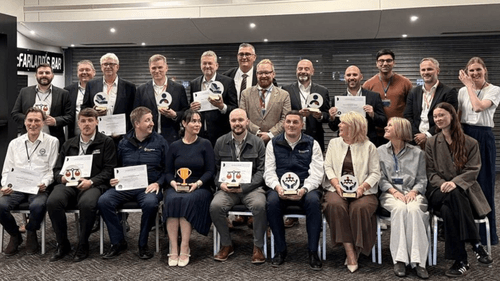
Rullion wins at 2026 Alstom Supplier CSR Awards

Rullion wins at 2026 Alstom Supplier CSR Awards

Rullion has been independently recognised by Alstom, one of the UK and Ireland’s largest rail organisations, for its work in protecting the health and wellbeing of people across safety-critical infrastructure. At Alstom's Supplier Corporate Social Responsibility Awards, held during its Supplier Day, Rullion won the Improve Health and Wellbeing Award for Large Companies. The awards recognise suppliers delivering meaningful social value across Alstom’s UK and Ireland supply chain, with entries judged by the customer teams who work closely with them. In its assessment, Alstom highlighted Rullion’s strong focus on preventing work-related ill health through robust risk management, as well as its understanding that wellbeing initiatives only make a lasting difference when they are supported by the wider culture. The feedback also described the breadth of evidence submitted by Rullion, including activity linked to an Alstom-hosted Inspire session. Wellbeing that supports real working lives At Rullion, supporting wellbeing is built into how we deliver workforce solutions rather than bolted on as a separate campaign. Our focus is on spotting pressure early, before it affects someone’s health and their safety on site, or the continuity of a client’s project. That means giving people consistent support, whether they are a permanent employee or a contractor working on a short-term assignment. Across the business, this is supported by trained specialists, practical manager guidance, and clear routes into help when someone needs it. This includes Mental Health First Aiders, I-ACT practitioners, our Wellbeing Warriors network, and partnerships with organisations such as Able Futures and Help@hand. In rail and other safety-critical environments, early support can make a real difference. Fatigue, stress, travel pressures, working patterns, and fitness-for-work concerns all need to be understood before they become a risk on site. This sits alongside the compliance frameworks rail employers already rely on, including RISQS and Sentinel, where workforce readiness and safety are closely connected. By staying close to people and giving managers the tools to respond, Rullion helps protect individual wellbeing while supporting safer, more reliable project delivery for clients. For clients, this joined-up approach helps protect individual wellbeing while supporting safer, more reliable project delivery. Supporting contractors in safety-critical environments Contractors are central to the UK rail workforce, often deployed on time-sensitive projects where compliance and site readiness leave little room for disruption. Rullion's role goes beyond placing people into roles. Our teams stay close to contractors across their assignments, so concerns surface early rather than at the point they affect a shift or a milestone. This means regular contractor engagement, proactive fatigue management, and direct conversations about travel, working patterns, medical compliance, and fitness for work. When we identify a risk, we work with the client to resolve it before it lands on site. Keeping contractors well and engaged is better for the individual, but it also supports the smooth running of large-scale programmes. A workforce that feels supported is more likely to remain prepared and able to work safely in demanding environments. A partnership shaped by shared standards This recognition is especially meaningful because it comes from a long-standing customer relationship. Alstom sees how Rullion operates day to day, and this award reflects the experience of the teams who work alongside us. It is also the second time Rullion has been recognised at Alstom’s Supplier CSR Awards, following our previous win in the Driving Equal Opportunity Award for Large Companies category. Being recognised twice, across two different areas, reflects Rullion’s wider role as a workforce partner committed to opening up access to opportunity and supporting the wellbeing of people across the rail supply chain and wider critical infrastructure programmes. Alistair Haigh, Executive Director at Rullion, said: “Being recognised by Alstom is a proud moment for us. Across critical infrastructure, supporting people well is fundamental to delivering complex projects safely and successfully. It is not a nice-to-have. This award reflects the care our teams show every day, supporting clients and contractors to create safer, healthier working environments. We're grateful to Alstom for the recognition and proud of the partnership we've built together.” Continuing to build healthier, safer workforces Workforce support has to hold up on-site, across depots, project sites and live safety-critical operations. Continuing to invest in wellbeing means helping people feel looked after while giving clients more stable, resilient, and engaged workforces. We sustain that by: Providing early support when concerns are identified Maintaining regular engagement with employees and contractors throughout their assignments Equipping managers with the guidance and tools to support their teams effectively Working closely with clients to promote safe, healthy, and sustainable working environments This is not only a rail story. It is part of Rullion’s wider role as a workforce solutions provider for critical infrastructure. In these settings, a well-supported workforce helps large-scale programmes move safely and reliably, with the people they need in place.

By Rullion on 28 July 2026

PODCAST
Why the ‘Nuclear Skills Gap’ Is the Wrong Conversation

Why the ‘Nuclear Skills Gap’ Is the Wrong Conversation

The nuclear skills gap is usually described as a shortage: not enough engineers, too few graduates, and a limited pool of people ready to support the next phase of UK nuclear delivery. But the nuclear skills gap may be the wrong starting point. The sector does need people urgently, but the bigger challenge is how we recognise and develop talent and connect them to the right opportunities. In that sense, the problem is not only a supply issue. It is also a hiring problem, a communication problem, and a workforce planning problem. Across the energy and nuclear sectors, the contradiction is hard to ignore. Employers say they cannot find the people they need, while early-career professionals and career changers are struggling to access roles they are capable of growing into. Demand is rising as the UK pushes ahead with nuclear new build, works towards net zero and plans for long-term infrastructure delivery. Yet the conversation is still often framed as a UK skills shortage, as though the only answer is to create more people with the right labels on their CV. That misses a more useful question. What if the talent already exists, but the sector is not always looking for it in the right way? Jump to: The skills gap narrative is too simplistic Careers aren’t linear, but hiring in nuclear still is Transferable talent is more prevalent than ever Why the future of work is reshaping what “job-ready” means in nuclear University isn’t the default route into nuclear careers How to close the skills gap in nuclear Adapting your workforce planning The skills gap narrative is too simplistic The phrase “skills gap” is useful because it creates urgency. It gives employers, educators, and policymakers a shared problem to rally around. But it can also flatten a much more complicated issue. When hiring teams talk about an employee skills gap, they often mean something specific: candidates are not arriving with the exact sector background or technical exposure listed on the job specification. In nuclear that caution is understandable. Safety, regulation, site knowledge, and procedural confidence all matter. However, when every vacancy is designed around a perfect match, the pool narrows before potential is even considered. Job descriptions can become filters rather than gateways. They reward people who already know how to describe themselves in nuclear language and discourage those whose expertise has been built elsewhere. That creates a disconnect between candidates and hiring managers. One side sees a role they cannot quite match. The other sees a CV that does not immediately translate. Miguel Trenkel-Lopez captured this neatly in his Hot Off The Grid conversation. Through Megawatt, Miguel has spoken to young people who say they have applied for roles and have been rejected despite having relevant skills. He has also spoken to companies who say they are trying to hire but cannot find people. His conclusion was blunt: “It’s not a skill shortage. It’s a communications failure.” This perspective changes the response the sector needs. If the problem is only a shortage, the answer is to keep pushing more people into the pipeline. If it is also a communication and translation problem, the sector needs to think beyond the skills gap and look at how talent is identified and developed. Careers aren’t linear, but hiring in nuclear still is Career paths have changed. People no longer move through one neat route from education to entry-level role and then specialist career. They build experience across different sectors. They move sideways and retrain. Or they discover an industry through advocacy, outreach, a graduate scheme, or a chance conversation. Hiring in nuclear has not always adapted at the same pace. Many nuclear roles are still assessed against linear criteria: a particular degree, a recognisable employer background, or a set number of years in a similar regulated environment. Those things may be relevant, but they are not the whole picture. When hiring models focus too heavily on direct experience, they risk missing candidates whose careers have given them the judgement, curiosity, discipline, and adaptability the sector needs. Yasmin Ali’s career is a useful example. She began in fossil fuel generation, including a coal-fired power station, before moving through gas, district heating, government, and clean energy. When she wanted to shift direction, recruiters tended to frame her by the role she had most recently done rather than the broader expertise she had built. She used her network to make the move, but not every candidate has access to that kind of informal bridge. That is one of the hidden weaknesses in current hiring models. They depend too heavily on candidates knowing how to translate themselves. In a complex sector like nuclear, that cannot be left to chance. Transferable talent is more prevalent than ever Between entry-level candidates and perfect-match hires sits a large group of overlooked people: transferable and adjacent talent. They may not describe themselves as nuclear candidates, but they often hold experience that could be highly relevant with the right assessment and development. Construction Large-scale infrastructure Manufacturing Energy & Utilities Defence Transport Major project delivery Compliance Safety Operations Regulated environments The barrier is rarely a total lack of ability. More often, it is that their experience is framed differently. A hiring manager may be looking for direct sector experience, while a candidate reads the same role and assumes they do not belong. If the search then relies too heavily on familiar keywords, people can be excluded before their potential is properly explored. This is particularly important for nuclear recruitment because the sector needs more than one kind of specialist. It needs engineers, but it also needs project managers, technicians, planners, safety professionals, commercial teams, supply chain expertise, communicators, and people who understand how large infrastructure programmes actually get delivered. The nuclear career opportunities are vast. The workforce required to build, operate, and maintain nuclear projects is wider than the public perception of the industry often suggests.A project planner from rail may already understand programme controls, stakeholder management, and how to work within complex regulatory frameworks. A safety professional from defence may have experience operating in highly controlled environments where compliance and risk management are critical. The underlying capabilities are often transferable, even when the sector terminology is different. Jens Christiansen’s route into nuclear shows how much difference exposure and connection can make. In Denmark, where nuclear power has long faced political barriers, he built his pathway through advocacy, university choices, networking, and an internship in Sweden. His story is not a neat linear funnel. It shows how interest becomes a career when people have access to the right guidance and opportunities. The lesson is clear. Talent may not always come from the expected source. The task for employers is to recognise talent earlier and create clearer routes into the nuclear sector. Why the future of work is reshaping what “job-ready” means in nuclear The expectation that candidates should arrive fully job-ready is becoming increasingly unrealistic. That is not unique to nuclear, but it is especially visible in a sector where the demand for specialised capability is increasing and experienced workers are retiring. There is a difference between 'job-ready' and 'development-ready' talent. A job-ready candidate can step into a role with minimal support. A development-ready candidate may not know every process on day one, but they have the underlying capability and adjacent experience to grow into the role with structured training and on-the-job exposure. Nuclear has always depended on learning in context. Site knowledge, safety culture, regulatory confidence, and procedural understanding do not develop through a CV alone. They are built over time alongside experienced teams, through real work. That means skills gap solutions cannot focus only on immediate vacancy fulfilment. They need to include long-term development routes, including train-to-deploy models, early careers support, mentoring, and clearer progression pathways. The sector cannot wait for fully formed talent to appear. It has to build the conditions for capable people to become nuclear-ready. University isn’t the default route into nuclear careers The previous conversation around nuclear education still matters. Universities play an important role in creating strong technical foundations, particularly for engineering and science roles. But they cannot be treated as the only answer. Young people are entering a much tougher employment landscape. Recent figures from the House of Commons Library put youth unemployment among 16 to 24-year-olds at 16.2%, at a time when infrastructure and energy employers are still talking about shortages. That should make the sector pause. If young people are struggling to access work while nuclear employers are struggling to hire, the issue is not only education. It is the bridge between education, awareness, and employment. Nuclear apprenticeships are part of that bridge. So are school outreach, early careers programmes, career-switcher pathways, and employer-led training. Daljeet’s story from the wider energy sector is a reminder that valuable careers do not always begin with university. She started as an apprentice, moved through customer operations and built a senior career in energy. As she put it, university is a good option for many people, but it is not the only option. That message matters for nuclear graduates too. The sector needs to make early career routes feel accessible and realistic. Not everyone will arrive already fluent in nuclear. The more important question is whether they have the potential to learn and contribute. How to close the skills gap in nuclear Closing the skills gap in nuclear starts with reframing the question. Instead of asking only, "Where are the people with this exact experience?" employers need to ask, "What expertise does this role truly require, and where else might that expertise exist?" That shift changes how roles are designed, how candidates are assessed, and how hiring teams think about risk. Job specifications need to focus more on outcomes than previous job titles. Transferable skills need to be mapped from adjacent sectors. Career pathways need to feel clearer for people who do not already know the industry. It also means treating nuclear workforce planning as a strategic activity and not a reactive response to vacancies. If employers know what expertise they will need in three, five or ten years, they can start building it now through apprenticeships, graduate programmes, train-to-deploy routes, redeployment, and cross-sector attraction. Adapting your workforce planning The nuclear workforce challenge is real, but it is not a simple absence of talent. It is a disconnect in how talent is defined and moved into opportunity. That is why the traditional model of matching people to jobs is increasingly misaligned with how nuclear careers actually develop. The industry needs a wider view of talent, one that recognises potential before it is packaged into familiar nuclear experience. For employers, the opportunity is significant. Better translation of skills means broader candidate pools, stronger retention and more resilient project delivery. For candidates, it means seeing a route into a sector they may previously have ruled out. The skills gap conversation is not wrong because skills do not matter. The skills gap is real. It becomes less useful when the conversation is limited to just the shortage. The better conversation starts with better routes into the sector. It also means recognising potential earlier and creating a workforce strategy that reflects how people are building their careers today. The UK’s and Europe’s nuclear ambitions will ultimately depend on people. And not just those already working in the sector. Those who could be, if given the right opportunity. To hear more conversations from across the nuclear and other critical infrastructure sectors, explore our Hot Off The Grid podcast series.

By Rullion on 01 July 2026