
Managing Nuclear Waste and Rethinking Disposal with Rod Baltzer

BLOGBy Rullion on 11 December 2025

The nuclear conversation often focuses on energy production, but what happens at the back end of the fuel cycle is just as important to speak about. Rod Baltzer, Chief Executive Officer of Deep Isolation, brings this overlooked part of the industry into sharp focus. In Episode 7 of Hot off the Grid, he joins Sibel Akel, Marketing Director at Rullion, to challenge some of the biggest misconceptions around nuclear waste and explore the groundbreaking technologies reshaping long-term disposal.

Watch the full episode of Hot off the Grid with Rod or read on for the key themes shaping the future of nuclear waste management.

An unintended journey into nuclear waste

Rod Baltzer didn’t plan a career in nuclear. His professional journey began in accountancy, far from reactors and nuclear energy waste repositories.

“I’m actually a CPA, an accountant… and the company I joined owned a radioactive waste business. I got involved through finance and have been fascinated with the industry for the last 25 years.”

As Rod became more involved in the waste side of the business, he found himself increasingly drawn to the technical and regulatory complexities of the nuclear sector. It was an industry unlike any other he had encountered. 

Over time, that “accidental” entry point evolved into deep expertise. Before joining Deep Isolation, Rod served as President and CEO of Waste Control Specialists (WCS), where he oversaw operations, regulatory engagement, and the NRC licence application for the consolidated interim storage of used nuclear fuel. This experience has since positioned him as one of the industry’s leading voices on nuclear waste management and a strong advocate for innovation at the back end of the fuel cycle.

His story is a powerful reminder that the future of nuclear isn’t shaped only by those who start there, but by those curious enough to step into it.


The biggest misconceptions about nuclear waste

When people hear “nuclear waste”, their minds often go to green goo, danger, or sci-fi-style mutations. In reality, it’s something far more controlled and far more common than most realise.

“You think of The Simpsons and the green goo, but it’s just not that way… Most people don’t realise they probably live within about 50 miles of nuclear waste... There is so much misperception about safety, but we have such a long track record of doing things safely.”

What many don’t realise is how limited the truly high-level waste stream is in the UK. In the UK, less than 10% of radioactive waste by volume is planned for deep geological disposal. The vast majority is low-level waste that can be safely managed through existing, tightly regulated facilities. The Office for Nuclear Regulation and Environment Agency reported future disposal sites for higher activity waste will be governed by “rigorous safety, security, safeguards and environmental standards throughout all phases”.

This gap between perception and reality is one of the biggest barriers facing the future of nuclear, and it directly impacts policy, funding, community acceptance, and talent attraction.


Rethinking nuclear waste storage

For decades, the accepted solution for storing spent nuclear fuel has been a deep, mined repository. Massive 18-foot-wide mine repository tunnels with complex ventilation systems and huge infrastructure costs.

But Rod and the team at Deep Isolation have taken a radically different approach to managing nuclear waste, borrowing proven technology from the oil and gas sector. Instead of enormous underground chambers, Deep Isolation uses slim boreholes just 21 inches wide, drilled deeper and laterally, significantly reducing cost and surface disruption (2-3% of the traditional site). This approach could result in faster deployment timelines using drilling rigs rather than multi-year tunnelling projects.

 “Without all the engineered barriers and ventilation systems, we’re at less than half the cost of a mined repository.”


The power of transferable talent

Over the last few years, the nuclear industry has been actively recruiting from beyond its traditional pipeline. In the UK, the civil nuclear workforce grew by 35% between 2021 and 2024, reaching approximately 87,000 workers. For many roles, the key isn’t a nuclear-specific degree but rather experience in heavy industry, drilling, robotics or remote operations. All skills that transfer from sectors such as oil & gas, mining and construction.

One of the most compelling parts of Rod’s story is the new talent pipelines Deep Isolation unlocks. Oil and gas professionals, drillers, geologists, robotics engineers and remote-ops operators are now nuclear-eligible talent.

“We feel like we could repurpose oil and gas drilling rigs… instead of extracting valuable resources, we’re putting spent fuel underground.”

Rod explains that the same drilling rigs and competencies used in oil and gas can be repurposed for nuclear waste disposal, shifting their purpose from extraction to containment. This opens the door for people with transferable skills from other sectors, giving them a pathway to retrain into the nuclear industry.


How can we attract the next generation of nuclear talent?

At a time when the nuclear industry is facing a global ‘skills gap’, Rod believes one of the biggest missed opportunities is simply access. Many students study nuclear engineering, physics, or related disciplines without ever seeing what those careers actually look like in practice.

One of the most hopeful moments in the conversation comes when Rod describes welcoming students to Deep Isolation’s demo centre. For many of them, it was their first real exposure to the physical infrastructure and technology behind nuclear power waste management.

“They got to see an oil and gas rig and our canisters… and they came away very excited. They said, ‘We’d never really seen this before. It kind of opened us up to this new field.’”

In an industry projected to require tens of thousands of new skilled workers over the next two decades, Rod believes this kind of early, hands-on exposure must move from “nice to have” to a strategic priority. Because you can’t build the future of nuclear if the next generation never gets to see it.


A career path people don’t realise exists

There are thousands of roles within the nuclear ecosystem that people simply don’t realise are open to them. 

Perhaps the most encouraging part of Rod’s story is just how many different routes there are into the nuclear sector, including for those who never expected to end up there. He didn’t begin as a nuclear engineer or geologist; he began as an accountant. Over time, curiosity and exposure drew him deeper into the complexities of nuclear waste, regulation, and long-term environmental responsibility, fundamentally reshaping the direction of his career.

His journey shows that nuclear is not a closed ecosystem reserved for a select few. It is supported by an entire network of disciplines, including finance, project management, drilling, geotechnical engineering, data analysis, operations, and risk modelling. In many cases, it is the combination of these perspectives that drives the most meaningful innovation.


The future of nuclear waste

The future of nuclear isn’t just about new reactors or flashy technology. It’s about legacy and intelligent design. Rod’s vision is a shift from reactive to proactive thinking:

  • Integrating waste planning into early reactor design
  • Reducing misperceptions through transparency
  • Opening pathways for cross-sector talent
  • Making nuclear simpler, not scarier

In many ways, how the industry goes about managing nuclear waste will define how the world chooses to trust nuclear at scale. Because building trust in nuclear means investing just as much in safe, transparent waste solutions as we do in the next generation of people who will deliver them.

Watch the full interview.

If you’d like to explore more perspectives from Deep Isolation’s leadership, you can also revisit our earlier conversation with cofounder Liz Muller, whose vision helped lay the foundations for the borehole disposal approach. Read and watch the full interview: “Rethinking Nuclear Waste: Liz Muller’s Mission to Revolutionise the Industry.”

Share

Powering the future of Nuclear starts with people

At Rullion, we work with pioneering organisations across the UK nuclear industry to find, attract, and support the people who are driving change. Whether you're scaling new technologies, meeting regulatory milestones, or shaping the next generation of clean energy jobs in the UK, we're here to help.

More like this

NEWS
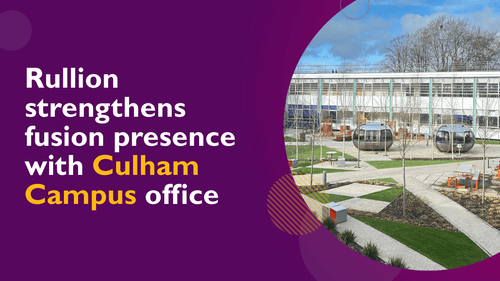
Rullion strengthens fusion presence with Culham Campus office

Rullion strengthens fusion presence with Culham Campus office

Rullion has relocated its Fusion team to a new office at Culham Campus, strengthening its presence at the centre of the UK’s fusion community. The team has long supported organisations based at Culham, but establishing a new home on campus marks a deeper commitment to the fusion sector. As the site continues to grow as a hub for fusion research, technology development, and commercial collaboration, being embedded within that environment enables closer working relationships across the wider fusion ecosystem, including organisations such as the UK Atomic Energy Authority (UKAEA). John Shepherd, Client Services Director, shared his perspective on strengthening Rullion’s presence at the heart of the fusion sector: “Culham Campus sits at the centre of the UK’s fusion community. Having our team based here reflects how important it is to work alongside the organisations driving this technology forward. Fusion represents a major opportunity for the future of energy, and delivering it will depend on building a workforce with highly specialised skills. Our role is to support that growth by connecting organisations with the talent they need, both in the UK and internationally.” Rullion is a proud member of the Fusion Skills Council and continues to play an active role in addressing the workforce demands facing the sector. As fusion moves from research into increasingly complex engineering and commercial programmes, access to specialist capability is becoming more significant. The team supports both contingent hiring and permanent hiring across highly technical disciplines, including: Plasma Physicists Tritium Fuel Cycle Engineers Cryogenics Consultants Tokamak specialists Robotics Engineers Alongside this, Rullion has expanded its international recruitment capability, supporting global mobility and bringing expertise to the UK where it is needed. This enables fusion organisations to access talent from established scientific and engineering markets including: Australia France Italy Switzerland By basing the team at Culham Campus, Rullion is reinforcing its position as a leading recruitment partner within the fusion sector and strengthening the relationships that will shape the next phase of fusion energy development.

By Rullion on 04 March 2026

NEWS
Rullion Named in the UK’s Top 20 Largest Staffing Firms by SIA

Rullion Named in the UK’s Top 20 Largest Staffing Firms by SIA

Rullion has been named by Staffing Industry Analysts (SIA) as one of the 20 largest staffing firms in the UK, recognising the scale of our role as a leading recruitment and workforce solutions provider nationwide and across Europe. The annual ranking places Rullion alongside the country’s leading providers supporting organisations with complex hiring and workforce challenges. Across critical infrastructure sectors including energy, nuclear, rail, and utilities, Rullion works in partnership with organisations to build and manage skilled project teams and wider workforce programmes that support long-term delivery. This can range from scaling engineering capability for major capital projects to overseeing managed service models that bring structure and consistency to high-volume hiring. Rullion’s services span permanent recruitment, temporary recruitment, and managed workforce solutions, including MSP and RPO models that support organisations through periods of transformation and long-term infrastructure investment. By combining sector expertise with flexible workforce delivery, Rullion helps clients improve workforce planning and strengthen access to scarce skills, all while maintaining continuity across complex national programmes. “This recognition reflects the work our teams do every day alongside our customers delivering critical infrastructure across the UK and Europe. The challenges our clients face require deep sector understanding and workforce solutions that adapt as projects evolve. Being named among the UK’s largest staffing firms is a result of the strong partnerships we’ve built and the practical, high-quality recruitment support we continue to deliver.” – Lindsay Harrison, Chief Customer Officer The SIA ranking provides independent recognition of Rullion’s continued growth as a workforce solutions provider supporting organisations responsible for some of the UK’s most important infrastructure programmes.

By Rullion on 26 February 2026

Executive Search Trends 2026 | The Future of Senior Leadership Hiring

Executive Search Trends 2026 | The Future of Senior Leadership Hiring

The executive search landscape in 2026 is being reshaped by large-scale investment across critical UK infrastructure, the energy transition, engineering programmes, and regulated industries. Projects such as energy grid reinforcements, utilities modernisations, large transport programmes, and nuclear new builds like Sizewell C and Small Modular Reactors (SMRs) are swiftly moving from planning into execution. At the same time, scrutiny from regulators, the media, and the government has intensified. For boards operating in these environments, senior leadership appointments now carry operational, reputational, and political weight. Executive search is no longer about identifying experienced profiles. It is about identifying leaders who can translate large-scale investment into safe, consistent delivery across high-risk environments. For organisations operating within core critical infrastructure programmes, understanding the shifts in executive search trends is becoming essential to securing the right leadership. Jump to: What are the biggest shifts in executive recruitment? What are senior candidates looking for in 2026? AI in executive search and boardroom strategy Workforce transition is no longer an HR issue Future skills required for C-suite roles Where executive leadership is headed What are the biggest shifts in executive recruitment? Political risk now influences executive decision-making One of the most significant executive search industry trends is not internal to organisations. Senior candidates are increasingly evaluating political stability and funding certainty before stepping into major roles. Infrastructure projects often depend on multi-year government commitment. When policy shifts or investment timelines change, the public face of delivery is the executive team. “There’s a real concern among senior leaders about the political risk attached to major infrastructure roles. You can join a project where investment is promised, then nothing happens for years. That uncertainty now plays heavily into whether executives will step into these positions.” – Asif Salam, Practice Director | Executive Search For boards, this means executive candidate sourcing must confront the reputational exposure attached to major programmes and provide clarity on how political backing and funding decisions will be sustained over time. Delivery discipline is replacing vision as the defining leadership measure In highly regulated sectors, senior leaders are being judged on whether projects are delivered safely and competently. There is growing recognition that insufficient upfront planning, weak engineering definition and compressed timelines create long-term operational risk. Executives brought into complex programmes are inheriting decisions made years earlier. Future executive appointments in nuclear, utilities and energy will be evaluated on governance rigour and execution capability as much as strategic direction. In a recent interview, Asif reflected on the biggest challenge leaders are facing right now: “It’s simply getting projects built. Historically, the work was done properly upfront. Engineering, planning, supply chain readiness. Now projects often start before that foundation is in place, and executives are left managing the fallout.” Cyber resilience has become a core executive responsibility Another clear executive search trend is the elevation of cybersecurity to board level. Legacy critical infrastructure systems were not designed for the scale of digital threat now facing them. These platforms in water treatment, transport, and energy networks were built for operational efficiency, not hostile attack environments. Recent cyber incidents affecting major UK organisations, such as Jaguar Land Rover, where production was disrupted for weeks following an attack on core systems, have underlined how quickly digital breaches become operational and financial crises. The cost of a successful attack on critical infrastructure sites could be far greater. It’s no longer something that can just sit with IT anymore. Executives are now expected to understand business continuity exposure/vulnerabilities and supply chain interdependencies as part of their strategic risk management. What are senior candidates looking for in 2026? The motivations of senior candidates have become more nuanced. Compensation remains relevant. However, the decision to move into a new executive role is increasingly shaped by structural and personal considerations. Certainty of mandate and authority Senior leaders want clarity on what they are empowered to change. In regulated infrastructure environments, governance layers can dilute authority. Executives are more likely to step into roles where the decision-making framework is defined and where accountability aligns with influence. Ambiguity around political backing or board alignment is becoming a deal-breaker. Long-term impact over short-term optics Many executives are assessing roles based on tangible contribution. Infrastructure leaders are aware that their work can affect national resilience, decarbonisation targets, transport safety, and energy security. The opportunity to shape delivery in these areas carries weight. There is also a noticeable openness to joining smaller or specialist organisations where influence is more direct, provided that programme stability exists. Leadership environments that allow delegation The complexity of infrastructure projects makes micromanagement ineffective. Asif highlights the importance of empowering capable teams: “The best leaders are flexible across sectors. They hire strong people and empower them. What can go wrong is the temptation to micromanage. In these environments, you cannot afford single points of failure.” Senior candidates are increasingly evaluating whether they will be able to build capable leadership layers beneath them, rather than firefighting alone. AI in executive search and boardroom strategy AI is often discussed in relation to recruitment efficiency, but in infrastructure it carries broader implications. In executive search, AI tools are being used to analyse leadership trajectories, map sector crossover talent, and identify capability adjacencies across industries. At board level, however, AI is a structural issue. “AI isn’t an IT upgrade. It’s a strategic inflection point. It reshapes talent, risk, customer engagement, and even regulatory relationships. The strongest leaders are treating it as a business model shift.” Asif Salam. For regulated industries, AI introduces governance and ethics as well as workforce adaptation challenges. Leaders must understand how automation affects legacy systems and employee capability. Executives are not expected to be data scientists; they are, however, expected to understand strategic implications and how their actions may also impact stakeholder trust. Workforce transition is no longer an HR issue One of the most pressing challenges in critical infrastructure is demographic. Experienced engineers and operators are retiring. And with ongoing digital transformation across industries, digital and systems expertise is required at scale. The overlap between these capabilities is limited. Boards are therefore prioritising senior candidates who can oversee workforce transformation while maintaining safety and regulatory standards. This has direct implications for executive search trends in 2026. Talent mapping must extend beyond traditional pipelines. Future skills required for C-suite roles Across critical infrastructure programmes, the profile of successful C-suite talent is evolving. Technical credibility remains important. However, executive candidate sourcing is increasingly assessing: Judgement under regulatory scrutiny The ability to manage long investment cycles Clarity of communication with government and public stakeholders Comfort with digital transformation in legacy systems Self-awareness and adaptability Where executive leadership is headed Infrastructure organisations are expanding their executive structures to reflect new risk landscapes. In addition to traditional operational leadership roles, there is a bigger focus on: Chief Risk Officer and resilience roles Digital and information governance leadership Chief AI Officer and data oversight functions Culture and workforce transformation leadership What this means for organisations hiring executive talent Executive search trends in 2026 show that senior leadership appointments in regulated industries now sit at the centre of political exposure, operational delivery, digital risk, and workforce transition. Organisations competing for C-suite talent must demonstrate programme stability and clear governance, alongside a credible long-term vision for delivery. In parallel, executive search partners need deep sector understanding, access to leadership talent beyond traditional pipelines, and the ability to evaluate strategic judgement in complex environments. At this level, the cost of the wrong appointment is increasingly high.

By Asif Salam on 18 February 2026