Nuclear Workforce Planning in 2026
The UK’s nuclear sector is moving into 2026 with clear momentum.
By September 2025, UK civil nuclear employment had reached just under 100,000 roles, a record high. Growth is being driven by a wider mix of programmes than many people assume. It’s not only large-scale new builds; it’s also fleet operations, defuelling, decommissioning, supply chain activity, and emerging delivery models like Small Modular Reactors (SMRs) beginning to shape future nuclear workforce planning.
At the same time, government direction is becoming clearer. The UK’s long-term nuclear sector plan is increasingly defined through national roadmapping and policy signalling with an emphasis on sustained nuclear capability through to 2050. And that has implications for how workforce strategy is shaped in 2026.
Delve into (and jump to):
- Why 2026 is a turning point for workforce planning in the nuclear sector
- One sector, very different workforce needs
- The skills shaping nuclear hiring in 2026
- Where nuclear workforce planning breaks down
- What better nuclear workforce planning looks like in practice
- What major programmes are signalling in 2026
Why 2026 is a turning point for workforce planning in the nuclear sector
The nuclear workforce challenge is often described as a shortage issue. In reality, the pressure points in 2026 are more specific and more operational.
This year sits at the intersection of several competing demands:
- Major new build delivery continuing at scale (including Hinkley Point C and Sizewell C)
- Sustained demand across the existing nuclear fleet, including operations and nuclear life extension planning
- Long-term decommissioning and waste management programmes continuing nationally
- Rising expectations around safety, quality, assurance, and regulatory compliance
- Growing demand for digitally enabled engineering and delivery capability
- Increased attention on the workforce implications of SMRs, including the shift toward repeatability and standardised delivery models
In 2026, the same skill sets are being pulled in multiple directions at once: across different sites, delivery stages, and risk environments. The result is a more competitive hiring landscape, leading to longer lead times for scarce capability and higher consequences when workforce planning is reactive.
One sector, very different workforce needs
“Nuclear recruitment” is often treated as one market. Where in actuality, it’s several markets layered together, and the differences matter.
Workforce requirements shift dramatically depending on where a programme sits in the lifecycle:
- New build delivery
- Ongoing operations
- Life extension activity
- Defueling and decommissioning
- Emerging delivery models like SMRs
Each stage behaves differently in terms of supply, scarcity, onboarding time, and compliance requirements.
Design & Engineering
Design and early engineering work tend to rely heavily on:
- Systems and discipline engineering (mechanical, electrical, C&I)
- Safety case and assurance capability
- Governance, documentation, and regulatory awareness
This is also where “transferable skills” can genuinely work. But only when expectations are set properly. Nuclear environments reward structured thinking, documentation quality, and delivery discipline as much as technical capability.
This is increasingly relevant as SMR conversations mature. While the delivery model differs from large-scale builds, the fundamentals remain consistent: nuclear-grade quality mixed with engineering rigour and configuration control.
Construction & Commissioning
Nuclear workforce growth becomes most visible and most pressured here. In 2026, what becomes most challenging has more to do with readiness than availability. Projects don’t simply need people who can do the work. They need people who can deliver at pace to nuclear standards, within nuclear governance. Early workforce planning here is what can prevent project bottlenecks later.
Construction and commissioning typically demand:
- High-volume site delivery capability
- Strong quality culture (inspection, welding, fabrication, assurance)
- Commissioning expertise aligned to safety and compliance expectations
- Logistics, HSE leadership, and interface management
Operations & Maintenance (O&M)
Operations is where nuclear becomes long-term. This is also where nuclear life extension activity becomes a real workforce driver in its own right. Extending the operating life of existing stations relies on retained knowledge and stable capability, and not just recruitment volume.
These roles depend on:
- Reliability and asset performance expertise
- Maintenance planning and outage delivery
- Compliance, governance, and leadership maturity
- Deep site knowledge and consistency
Decommissioning & Waste Management
Decommissioning is sometimes underweighted in workforce conversations, despite being one of the most sustained drivers of UK nuclear employment.
The Nuclear Decommissioning Authority’s (NDA) Draft Business Plan 2026–29 (published December 2025) reinforces decommissioning as a long-duration national programme, with ongoing workforce requirements across dismantling, waste handling, remediation, and programme leadership.
This work is often less visible than new builds, but it remains essential to the credibility and delivery of the UK’s wider nuclear programme.
Check out our interview with Deep Fission’s CEO, Liz Muller, on rethinking nuclear waste management.
The skills shaping nuclear hiring in 2026
Demand in nuclear workforce planning isn’t only about headcount. It’s about the right capability, in the right place, at the right time, delivered to the right nuclear standards.
As we move through 2026, pressure remains high in areas such as:
- Electrical engineering and C&I
- Systems integration and commissioning
- Quality, inspection, and assurance
- Safety case and regulatory-aligned delivery roles
- Project controls (planning, cost engineering, scheduling)
- Construction management and interface coordination
- Digital capability (safety, configuration control, performance)
What’s notable in 2026 is that these skills are needed across multiple programme types at once. Across the lifecycle, one theme remains consistent: technical skill matters, but so does the ability to operate inside nuclear governance, with process discipline, documentation quality, and assurance expectations playing a key part of the job.
Where nuclear workforce planning breaks down
Even with all this nuclear sector growth, one of the biggest friction points is the gap between nuclear talent having the right technical background and being fully ready for nuclear delivery environments.
That “missing middle” tends to show up in areas like:
- Project-readiness and site-readiness
- Compliance and assurance expectations
- Safety culture alignment
- Documentation standards and quality processes
Geography adds another layer. Large programmes require both regional workforce development and national mobilisation. Without both, pressure builds quickly in local markets. This is why early workforce activity matters. Early shaping of pipelines leads to early team stabilisation and less reactive delivery, especially when multiple programmes are driving demand simultaneously.
This is where an abundance mindset matters most. The constraint isn’t that talent doesn’t exist. It’s that readiness is uneven and pathways into nuclear delivery remain too narrow. When organisations invest early in conversion, onboarding and nuclear-grade standards, capacity expands quickly. When they don’t, scarcity feels permanent.
“The challenge in nuclear isn’t a lack of people. It’s that capability is arriving at different levels of readiness, at different times, across different programmes. Workforce planning is about aligning that, not just filling roles.”
— James Chamberlain, Nuclear, Sector Director, Rullion
What better nuclear workforce planning looks like
The most effective workforce strategies in 2026 share a few key traits:
Plan by lifecycle phase, not just job titles
Nuclear delivery depends on sequencing. Workforce planning needs to follow the demand curve across the lifecycle and not just the current open vacancy list.
This forward planning can noticeably start to reduce risk:
- Clearer lead times
- Better mobilisation
- Fewer last-minute compromises on quality or readiness
Build structured routes for scarce and transferable capability
The sector can’t rely only on nuclear-experienced talent. But “transferable” doesn’t mean instant. Transitions work best when there is clear structure around:
- Expectations and standards
- Onboarding and compliance readiness
- Progression pathways once inside the sector
Where skills are transferable but nuclear readiness takes time, Train to Deploy helps build job-ready nuclear talent by combining targeted training with your delivery standards, so people arrive ready to contribute from day one.
Invest in early careers with conversion in mind
The National Nuclear Strategic Plan for Skills includes commitments to scale early career routes, including the ambition to double apprentices entering the nuclear workforce by academic year 2025/26, with 2,500+ apprentices joining the nuclear workforce in 2024/25.
The differentiator is what happens after entry: development pathways, retention, and long-term capability building.
Treat workforce as delivery risk management
In critical infrastructure, workforce constraints don’t only slow hiring. They affect commissioning timelines, quality performance, and programme confidence.
This becomes even more important when the sector is balancing large-scale builds, fleet operations, life extensions, decommissioning delivery, and next-generation programme development such as SMRs.
“You can’t separate workforce planning from mobilisation. If screening, onboarding, and readiness aren’t designed for scale, the workforce exists on paper but not on site.” — Jayne Lee, Head of Candidate Services, Rullion
What major programmes are signalling in 2026
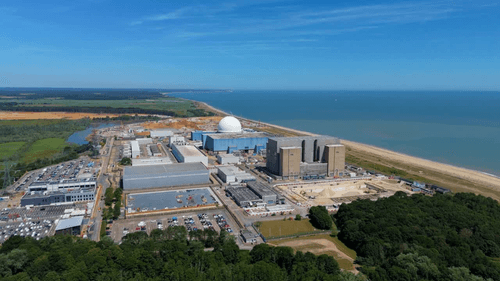
Sizewell C is a strong example of early workforce momentum, and it sits within a wider landscape that includes major delivery demand at Hinkley Point C and sustained activity across operational and decommissioning sites.
In the last month, Sizewell C has reported:
- Around 2,000 workers onsite
- More than 100 apprentices appointed
- Around £3bn in contracts awarded to 400+ UK suppliers
- Continued regional supply chain mobilisation
Early pipeline activity is already shaping workforce readiness, long before peak construction demand. This is the direction the wider market is moving in: earlier engagement, clearer forecasting, and more structured talent strategies across delivery phases.
The nuclear hiring landscape in 2026
2026 will continue to be a strong year for the UK nuclear sector, but it will also be a demanding one.
The organisations that deliver best will be those that approach nuclear workforce planning as a core part of programme execution:
- Anticipating scarcity early
- Building structured pipelines
- Protecting delivery confidence through quality and readiness
- Creating workforce models that can scale across multiple sites and phases